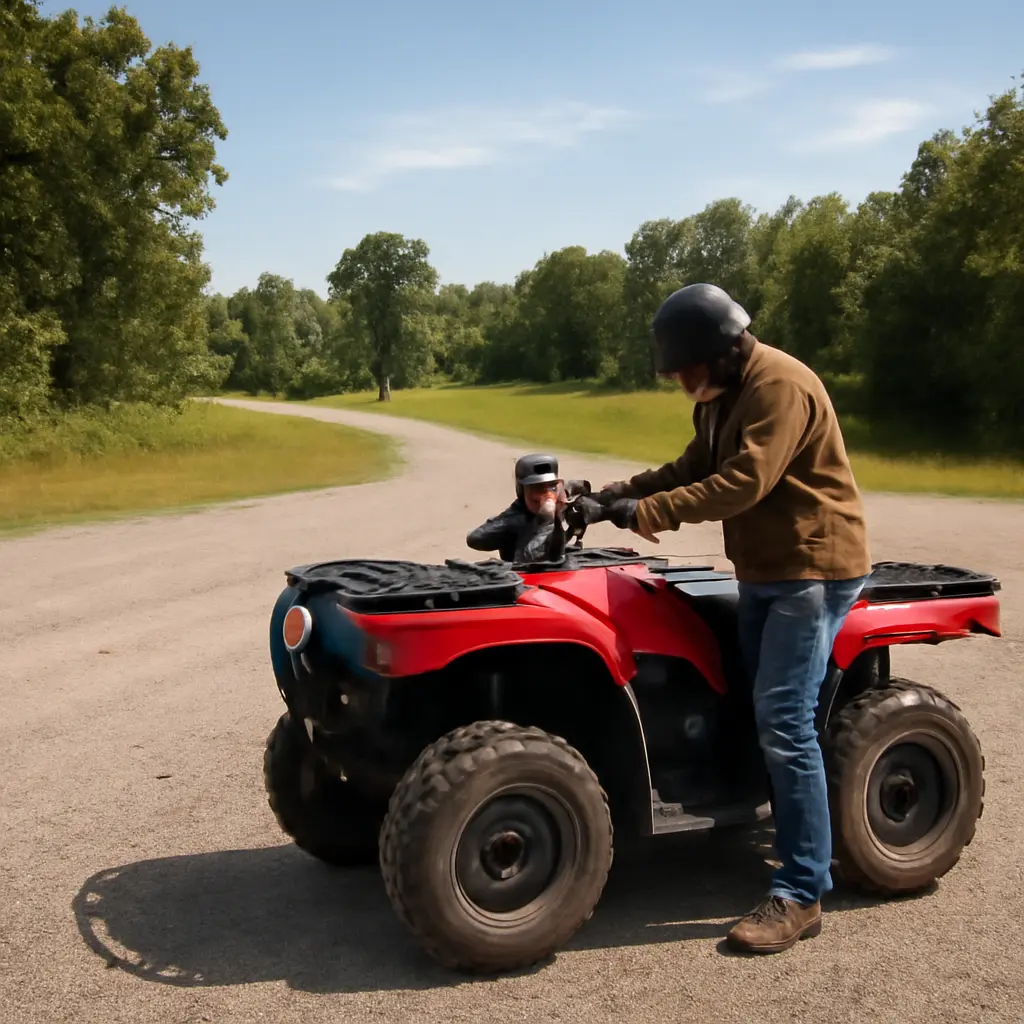
An ATV, or all-terrain vehicle, is a motorized off-highway vehicle designed to travel on varied surfaces such as dirt, gravel, and trails. On your first ATV ride, expect a mix of instruction, protective gear, gradual practice, and the physical sensations of steering and balancing on uneven ground—not simply a fast ride. The experience is safest and most enjoyable when you use a properly sized vehicle, follow a guide’s directions, and ride within your ability. That advice matters: the U.S. Consumer Product Safety Commission (CPSC) reported 2,448 ATV-related deaths among children younger than 16 from 1982 through 2022, underscoring why preparation and supervision are essential.
First ATV Experience: What the Ride Involves
A first ATV experience is a beginner’s introduction to operating an all-terrain vehicle, usually on a managed trail or designated riding area. The ATV Safety Institute (ASI) describes safe riding through its “Golden Rules,” which include wearing a helmet and protective equipment, riding an ATV appropriate for the rider’s age, and never carrying a passenger on a single-rider ATV. In practice, a first ride commonly includes a safety briefing, a demonstration of controls, low-speed practice, and a guided or supervised route.
ATVs are not cars: they have no enclosed cabin, and their handling changes with terrain, speed, and rider position. The CPSC warns that rollovers and collisions can cause severe injuries. Its safety guidance advises riders to avoid paved roads, never ride under the influence of alcohol or drugs, and avoid carrying passengers on vehicles designed for one person. These basics shape what beginners should expect before they start the engine.
Before riding: briefing, fit, and controls
A responsible operator or instructor should explain the route, hand signals, stopping procedures, emergency response, and local rules. You should also learn where the throttle, brakes, ignition, and any gear selector are located before moving. Controls differ by model, so do not assume that experience with one ATV transfers perfectly to another.
Vehicle fit is especially important for children and smaller riders. The CPSC’s age recommendations say children younger than 6 should never ride an ATV; children younger than 16 should not operate adult-size ATVs. Age labels are a starting point, not a substitute for checking whether a rider can reach and use the controls safely. If the vehicle feels too large or heavy to control, ask for a smaller model or do not ride.
Protective gear: what to wear
Protective gear is equipment intended to reduce the chance or severity of injury. At minimum, wear a properly fitted, standards-compliant helmet, eye protection, gloves, long sleeves, long pants, and over-the-ankle boots. A helmet should fit securely and be fastened; a loose helmet may not protect effectively in a crash. The ASI also recommends protective clothing because branches, debris, and contact with hot vehicle parts can injure exposed skin.
Rental operators may provide helmets, but riders should check that the helmet fits and is in sound condition. Ask what gear is included and what you need to bring. Sunglasses alone may not provide adequate protection from dust and flying debris; goggles or a suitable face shield are often more appropriate for off-road conditions.
First ATV Experience: How Beginners Learn to Control the Vehicle
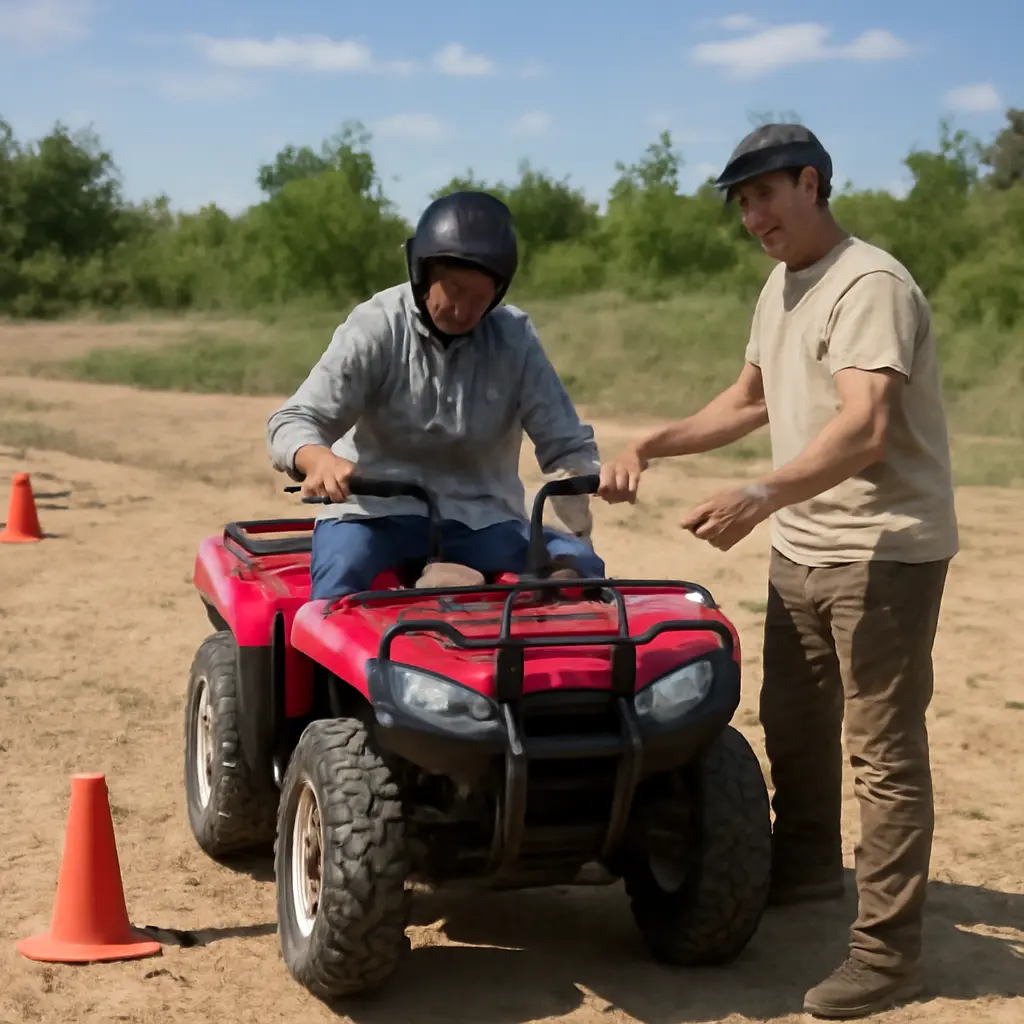
ATV control is the combination of throttle use, braking, steering, and body position. Unlike a car, many ATVs rely on the rider shifting weight to help maintain balance, particularly while turning or traversing uneven ground. The ASI’s training approach emphasizes learning the controls and practicing basic maneuvers before attempting more difficult terrain.
A novice lesson generally progresses from stationary demonstrations to slow, simple movements. Your instructor may ask you to start, stop, turn, and follow a marked path in an open practice area. If you are uncertain about a control or maneuver, stop in a safe place and ask rather than guessing.
Starting, stopping, and maintaining a steady pace
Beginners should learn how the throttle responds and how the brakes feel before riding on a trail. Smooth inputs are easier to manage than abrupt acceleration or braking. Keep enough distance from the rider ahead to stop safely, and use the speed set by the guide rather than trying to keep up by accelerating beyond your comfort level.
The first few minutes may feel unfamiliar because the engine’s vibration, sound, and response are new. That is normal. A gradual pace gives you time to notice how the ATV reacts and to follow instructions. If the vehicle behaves unexpectedly, ease off the throttle and follow the operator’s emergency guidance.
Turning and shifting your weight
Turning an ATV requires coordinated steering and body movement. Riders are generally taught to look through the turn, keep a controlled speed, and lean or shift their weight as instructed. The precise technique can vary with the model, speed, and terrain, so follow the instructor’s demonstration rather than relying on a generic rule.
Do not make sharp turns at high speed or attempt to copy experienced riders. The CPSC identifies loss of control and rollovers among the serious hazards associated with ATV use. On a beginner ride, staying upright and predictable is more important than completing a turn quickly.
First ATV Experience: Terrain, Ride Types, and Physical Sensations
Terrain is the surface and landscape over which an ATV travels. A first ride may take place on a flat practice area, a managed dirt trail, or a guided route with gentle slopes. The type of surface affects traction, visibility, and how much the vehicle moves beneath you. Choose a beginner-friendly route and tell the guide if you are uncomfortable with hills, mud, loose gravel, or other obstacles.
Common ATV experiences include guided recreational trail rides, supervised training sessions, and riding on designated private or public off-highway vehicle areas. These are not interchangeable: trail conditions, vehicle requirements, age rules, and permits vary by location. For example, the U.S. Forest Service notes that motor-vehicle use on National Forest lands is restricted to routes designated for that use; riders should check the applicable motor vehicle use map and local regulations before setting out.
What the ride may feel like
Expect engine vibration, wind, dust, and repeated small jolts as the tires cross uneven ground. Your arms, hands, shoulders, and legs may work harder than expected because you are holding the controls and responding to bumps. A ride can therefore feel physically tiring even at a moderate speed. Take breaks when offered, drink water, and tell the guide if fatigue is affecting your control.
Noise and environmental conditions can also shape the experience. Dust may reduce visibility, while rain can make surfaces slippery; heat can increase discomfort and dehydration risk. Eye protection, weather-appropriate clothing, and a route suited to current conditions help make the ride more manageable.
Guided trail rides versus self-guided practice
A guided ride is led by an instructor or tour operator who explains procedures and selects a route. It is often a practical choice for a first-time visitor because the operator can set expectations and respond to questions. Confirm the ride’s length, difficulty, minimum age, passenger policy, and what happens if you want to stop early.
Self-guided practice gives riders more independence but requires greater responsibility for training, route selection, vehicle checks, and compliance with land rules. Beginners should first gain instruction and practice in a controlled setting. Never assume a trail is legal or suitable just because it appears accessible; check signs, maps, and local land-manager guidance.
First ATV Experience: Safety, Risks, and Preparation
ATV safety means reducing risks through training, protective equipment, proper vehicle choice, and responsible decisions. CPSC injury and fatality data show why these measures matter: the agency’s reports document thousands of ATV-related deaths over decades, including the 2,448 deaths of children under 16 recorded from 1982 through 2022. The data do not predict what will happen on an individual ride, but they reinforce that an ATV is a powerful vehicle requiring attention and care.
Before booking or riding, check local requirements. Laws governing minimum operating age, training, helmets, registration, and where ATVs may be used differ across states and jurisdictions. A rental company’s rules do not necessarily replace legal requirements.
Common beginner risks and how to reduce them
Common hazards include rollovers, collisions, loss of control, poor visibility, unsafe passenger arrangements, and riding beyond one’s skill level. Reduce risk by keeping to the designated route, maintaining space between vehicles, slowing down for turns and unfamiliar ground, and stopping when visibility or conditions become unsafe. Never ride on public roads unless local law specifically permits the vehicle and route.
Alcohol, cannabis, and other impairing substances compromise judgment and coordination. Do not ride after using them. Also avoid riding when tired, distressed, or unable to concentrate. If you feel pressured to go faster or tackle a feature you are not ready for, tell the guide and opt out.
A simple first-ride checklist
- Confirm that the ATV is appropriate for your age, size, and experience.
- Wear a fitted helmet, eye protection, gloves, long clothing, and sturdy over-the-ankle footwear.
- Listen to the briefing and practice the controls before entering the trail.
- Check the route, weather, local rules, emergency plan, and passenger policy.
- Ride at a pace that lets you remain in control, and keep a safe following distance.
- Stop and ask for help if the ATV, terrain, or your own condition feels unsafe.
Conclusion: A Confident and Responsible First ATV Ride
Your first ATV experience should be an introduction to safe vehicle control, not a test of speed or bravery. Expect a safety briefing, protective gear, basic practice, changing terrain, and some physical effort. Learning the controls, choosing a suitable vehicle and route, and following a qualified guide’s instructions can make the ride more comfortable and reduce avoidable risks.
Before you go, check local laws and operator requirements, ask questions, and make sure you are equipped for the conditions. For further preparation, review the ATV Safety Institute’s rider guidance, the CPSC’s ATV safety recommendations, and the land manager’s rules for your chosen riding area.
Sources: U.S. Consumer Product Safety Commission, ATV Safety Information Center and ATV-related deaths and injuries data, https://www.cpsc.gov/Safety-Education/Safety-Education-Centers/ATV-Safety-Information-Center; ATV Safety Institute, ATV Safety and Golden Rules, https://atvsafety.org/; U.S. Forest Service, OHV Trail Riding, https://www.fs.usda.gov/visit/know-before-you-go/off-highway-vehicle-ohv-trail-riding