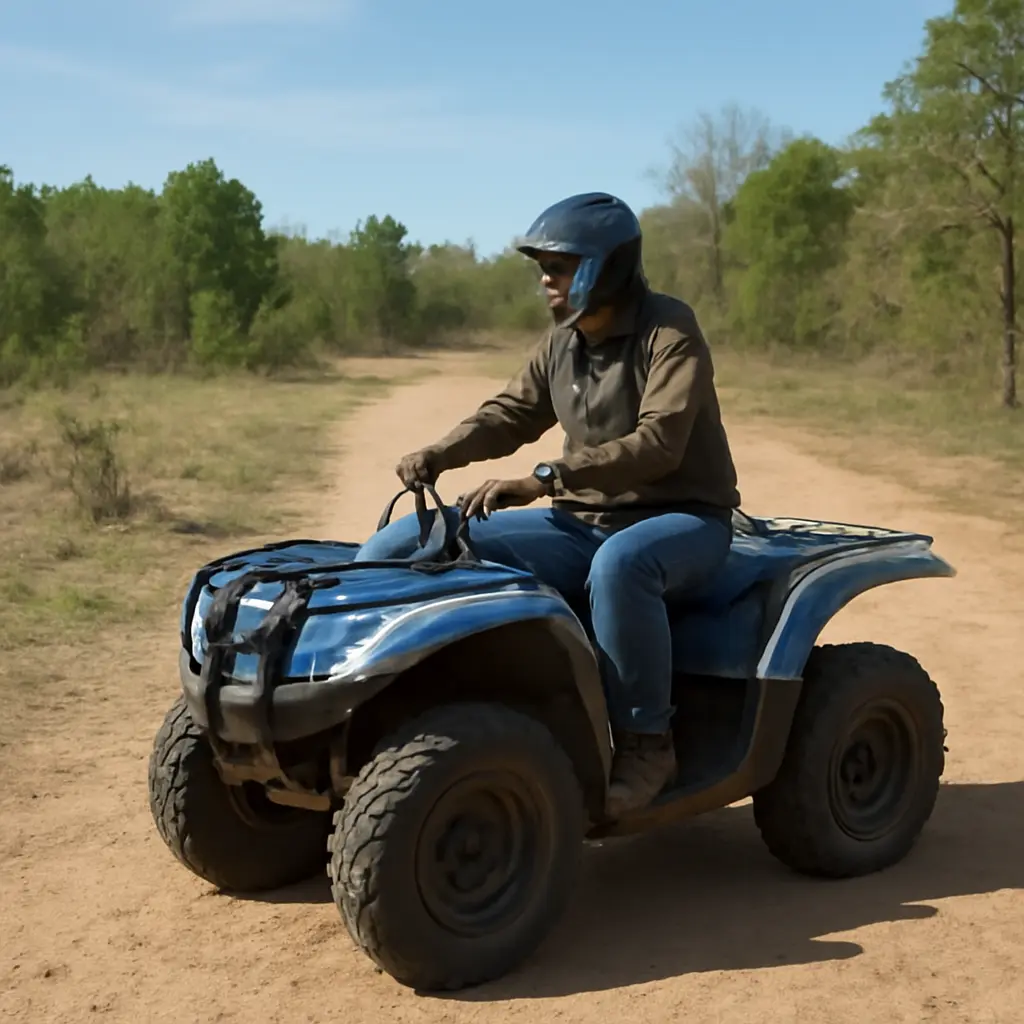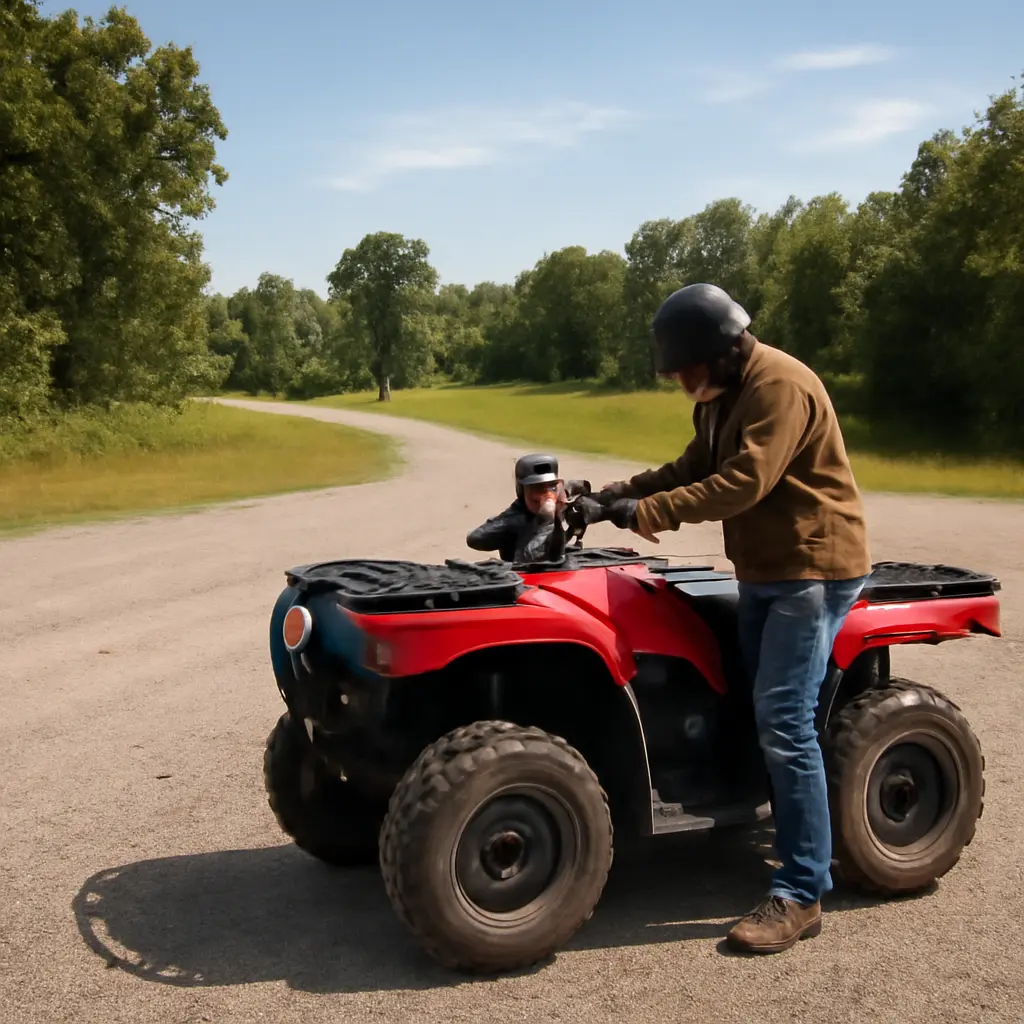
A first all-terrain vehicle (ATV) is a recreational or utility vehicle selected for a rider’s experience, intended terrain, physical fit, and safety needs. The best first ATV is not necessarily the most powerful or largest: it is one the rider can control comfortably and use legally for the activities planned. Choosing well means comparing engine size and vehicle type, checking fit and safety equipment, understanding local rules and ownership costs, and arranging hands-on training before riding. These steps matter because ATV crashes can cause severe injuries; the U.S. Consumer Product Safety Commission (CPSC) reported 545 ATV-related deaths for 2022, the latest year with complete fatality data in its annual report.
Match ATV type and engine size to the rider
An ATV is a motorized off-highway vehicle designed to travel on four low-pressure tires, with a seat intended for a single rider and handlebars for steering. The CPSC’s definition describes a vehicle with a straddled seat and handlebar controls; specific legal definitions can vary by jurisdiction. For a first purchase, this definition helps distinguish a conventional ATV from a side-by-side, which has seats and steering controls more like a car.
Engine displacement, measured in cubic centimeters (cc), is one useful comparison—but it is not a complete measure of safety or suitability. Vehicle weight, throttle response, gearing, tire choice, and rider skill also affect how an ATV behaves. The CPSC advises that children under 16 should use age-appropriate youth models rather than adult-size ATVs. Its age-based guidance recommends that riders ages 6–11 use models under 70 cc, riders ages 12–15 use models from 70 to 90 cc, and riders 16 and older use models over 90 cc. These are safety recommendations, not a substitute for checking state law, manufacturer instructions, or the rider’s ability.
Youth, entry-level, and adult models
Youth ATVs are smaller and designed around a child’s body and experience, while adult models generally have greater power and weight. “Entry-level” is not a standardized safety category, so compare actual specifications and handling rather than relying on a sales label. A new adult rider should consider a manageable model that allows smooth throttle control, comfortable braking, and confident mounting and dismounting. For a young rider, follow age labels and the manufacturer’s intended-use guidance; an adult ATV is not an appropriate shortcut as a child grows.
Utility, sport, and recreational ATVs
Utility ATVs typically prioritize practical tasks such as hauling or towing; sport models emphasize responsive handling and recreational riding; and recreational or trail models aim for a balance of everyday trail use and comfort. Features such as racks, a winch, four-wheel drive, and a selectable differential can be useful, but add weight, complexity, or cost. Choose features for a specific need rather than assuming that more equipment makes a first ATV safer or easier to ride.
ATVs versus side-by-sides
A side-by-side (also called a utility terrain vehicle, or UTV) is a different vehicle category, commonly featuring a steering wheel, foot controls, and side-by-side seating. It may suit a buyer who needs passenger capacity or a cab-like layout, but it has different dimensions, operating characteristics, and safety requirements. Do not assume that an ATV’s training, protective gear, or local access rules automatically apply to a side-by-side; check the specific vehicle manual and local regulations.
Evaluate fit, controls, and intended terrain
A suitable first ATV fits the rider and the places it will be used. Fit refers to whether the rider can reach and operate the controls, shift position, and maintain control without strain. The American Academy of Pediatrics recommends that a rider be able to reach the controls and place both feet on the footrests while seated. A showroom impression is not enough: ask a dealer about a supervised fit check and confirm that the model’s manual supports the rider’s intended use.
Check rider fit before purchase
With the ATV stationary and secured, the rider should be able to reach the handlebars, brake levers, and throttle; keep both feet on the footrests; and move naturally into a standing riding position if the design calls for it. Controls should feel accessible without locking the elbows or stretching. If a child cannot operate the controls reliably, choose a smaller age-appropriate model or wait—do not rely on supervision alone to compensate for poor fit.
Consider terrain and drivetrain
A flat, maintained trail, muddy ground, sand, and steep or rocky terrain place different demands on tires, ground clearance, suspension, and drivetrain. Two-wheel drive may be sufficient for some maintained routes, while selectable four-wheel drive can help in certain conditions; neither makes steep slopes or unsafe surfaces risk-free. Before buying, identify where riding is permitted, whether trail width accommodates the ATV, and whether the model’s ground clearance and tire setup fit those routes.
Compare transmission and controllability
Many ATVs use automatic or continuously variable transmissions, while others require manual shifting. Automatic operation can simplify gear changes for a beginner, but riders still need to learn throttle control, braking, balance, and terrain judgment. A test ride should only happen where lawful, with the seller’s permission, appropriate protective gear, and qualified supervision. If a test ride is unavailable, review the manual and ask a trained dealer to explain the controls and operating limits.
Make safety part of the purchase
ATV safety is a combination of a correctly sized vehicle, protective equipment, training, and responsible riding choices. CPSC data underscore why these are purchase criteria, not afterthoughts: its 2022 report recorded 545 ATV-related deaths, and its report on emergency-department-treated ATV injuries estimated 93,700 injuries in 2023. Those figures cover a broad range of riders and circumstances; they do not predict an individual rider’s risk, but they show the potential consequences of unsafe use.
Budget for a helmet and protective gear
A Department of Transportation-compliant motorcycle helmet is a core item, alongside eye protection, gloves, long sleeves, long pants, and over-the-ankle boots. A helmet should fit securely and be replaced after a significant impact or when its manufacturer’s guidance calls for replacement. Budget for gear before choosing an ATV; a lower purchase price is not a good deal if it leaves no room for equipment that reduces exposure to common riding hazards.
Take an approved hands-on safety course
Training teaches riders how to start, stop, turn, shift body position, inspect equipment, and respond to changing terrain. The ATV Safety Institute (ASI) offers hands-on courses, including its ATV RiderCourse, and provides safety information for riders and families. Check current course availability, eligibility, and local requirements before enrolling. New riders should practice basic skills in a controlled area before moving to trails, and should never carry a passenger on a single-rider ATV.
Adopt protective riding practices
Ride only on routes open to ATVs, follow posted limits, avoid paved roads unless specifically permitted, and never ride under the influence of alcohol or drugs. Do not exceed the vehicle’s passenger capacity or tow beyond the manufacturer’s limits. The CPSC and ASI also emphasize supervision for young riders and the importance of choosing a vehicle appropriate to the operator’s age and size. A chart comparing rider age, manufacturer-recommended model class, and applicable local rules can help families make these checks, but local law and the owner’s manual take precedence.
Estimate ownership costs and inspect the ATV
The purchase price is only one part of ATV ownership. A realistic budget includes safety gear, training, fuel, routine maintenance, tires, storage, transport, insurance where available or required, and registration or trail-access fees. Costs vary by location, model, use, and condition, so request a written estimate from a dealer and check state and local requirements before committing.
Compare total cost, not just sticker price
Ask what the advertised price includes, including assembly, delivery, documentation, and any accessories. For a used ATV, reserve money for a professional inspection and likely maintenance. A trailer or suitable transport vehicle may also be necessary because many public roads do not permit ATV travel. Check whether insurance products are offered and what they cover; coverage and legal obligations differ by jurisdiction and policy.
Inspect a used ATV and verify its history
A used ATV should be checked for frame damage, cracks, leaks, worn tires, loose steering or suspension components, brake condition, and signs of neglected maintenance. Start it only with the owner’s permission and follow the manual’s procedures. Verify the vehicle identification number (VIN), ownership documents, and any available service history, and check for outstanding recalls through the manufacturer or CPSC recall notices. A qualified mechanic’s inspection is especially valuable when the buyer cannot confidently assess drivetrain or frame condition.
Use a practical first-ATV decision process
A simple, repeatable comparison helps prevent a buyer from choosing on engine size or appearance alone. Narrow the selection to models that meet the rider’s age and fit requirements, then compare the details that affect actual use and ownership.
- List the intended riders, their ages and experience, and whether the ATV will be used for recreation, work, or both.
- Confirm that the model is designed for each rider and that the rider can reach and operate the controls.
- Check the owner’s manual, engine displacement, weight, drivetrain, passenger capacity, and terrain limitations.
- Verify that the intended trails or work areas permit the vehicle and that registration and training requirements are understood.
- Price the full package: ATV, helmet and gear, course, maintenance, transport, storage, and applicable fees.
- For a used model, verify the VIN and ownership, check recalls, review service records, and arrange an inspection.
- Complete hands-on training and practice in a controlled setting before riding more challenging terrain.
Conclusion: choose control and suitability over power
Choosing a first ATV means matching vehicle type and engine size to the rider, checking physical fit and terrain needs, and treating training, protective gear, and local rules as essential parts of the purchase. Safety data from the CPSC make clear that ATV incidents can have serious consequences, while careful sizing and preparation help buyers make more informed decisions. Compare models using the owner’s manual and a complete ownership budget, verify used-vehicle condition and history, and complete hands-on training before riding. For further guidance, consult the CPSC, the ATV Safety Institute, your state’s motor-vehicle or recreation agency, and the manufacturer’s manual.
Sources: U.S. Consumer Product Safety Commission, All-Terrain Vehicle (ATV) Annual Report, 2022, https://www.cpsc.gov/s3fs-public/2022-Annual-Report-of-ATV-Related-Deaths-and-Injuries.pdf; U.S. Consumer Product Safety Commission, 2023 Report on All-Terrain Vehicle-Related Deaths and Injuries, https://www.cpsc.gov/s3fs-public/2023-Report-of-ATV-Related-Deaths-and-Injuries.pdf; U.S. Consumer Product Safety Commission, ATV Safety Information Center, https://www.cpsc.gov/Safety-Education/Safety-Education-Centers/ATV-Safety-Information-Center; American Academy of Pediatrics, All-Terrain Vehicle Injury Prevention: Two-, Three-, and Four-Wheeled Vehicles, https://doi.org/10.1542/peds.2000-0842; ATV Safety Institute, ATV RiderCourse, https://atvsafety.org/atv-ridercourse/; U.S. Consumer Product Safety Commission, Recalls, https://www.cpsc.gov/Recalls.