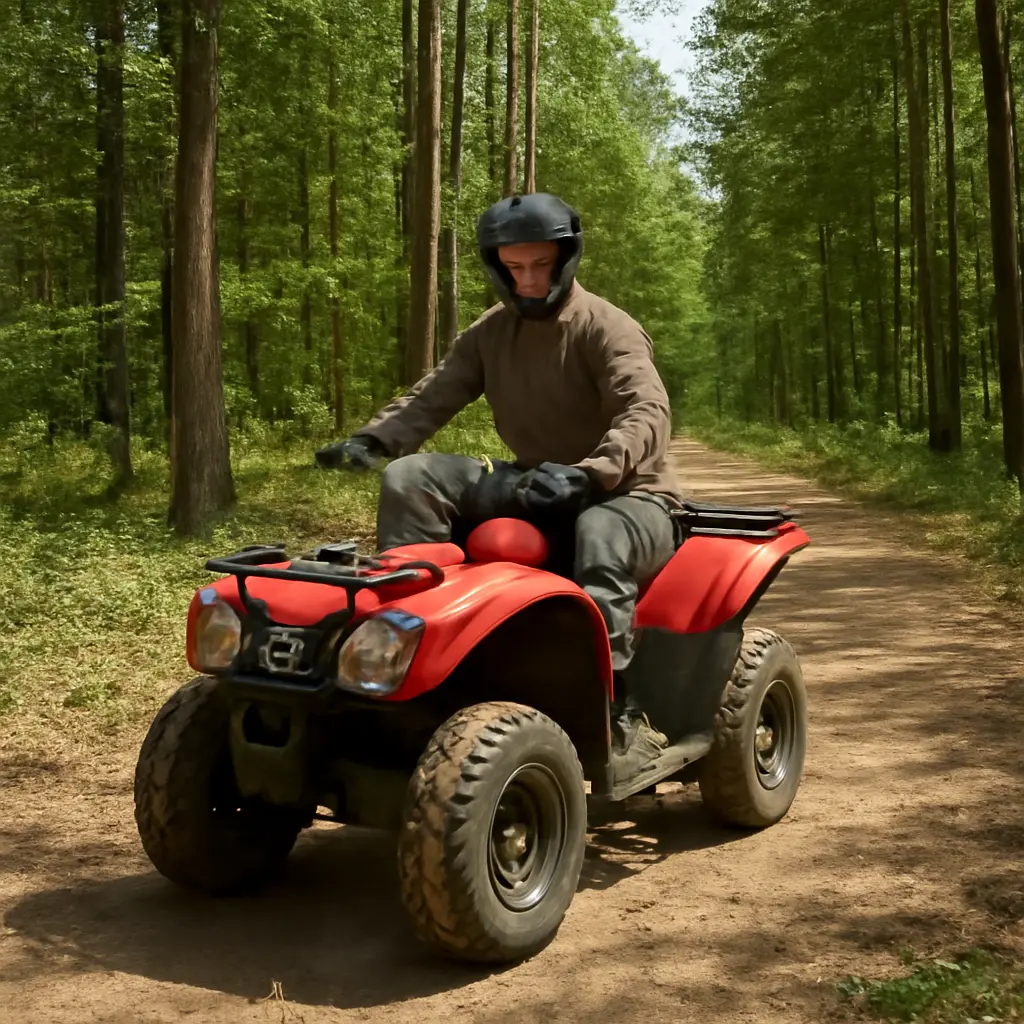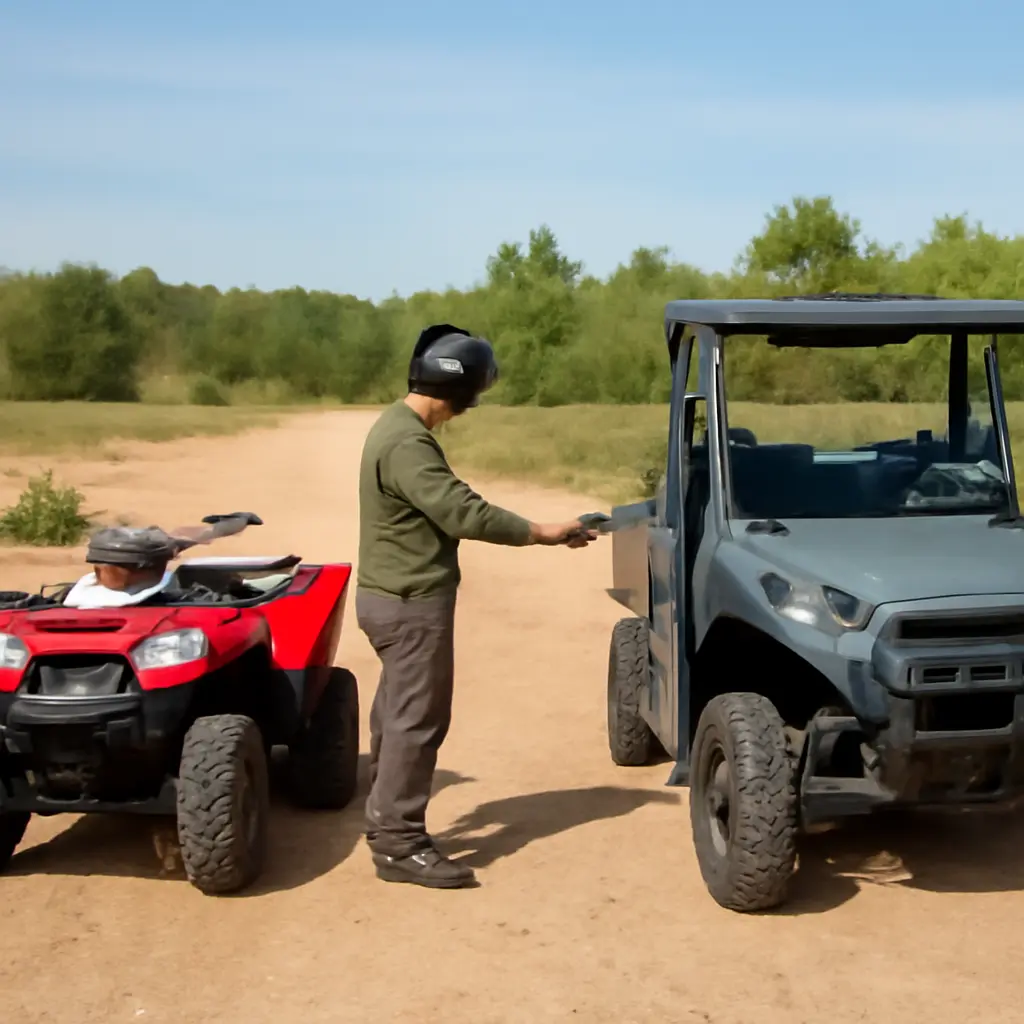
An all-terrain vehicle (ATV) is a motorized off-highway vehicle generally operated by a rider who straddles a seat and steers with handlebars; a utility task vehicle (UTV), also called a side-by-side, is driven from a seated position with a steering wheel and typically has side-by-side seats. In practical terms, ATV riding is a more exposed, active, and usually single-rider experience, while UTV driving offers a more enclosed, passenger-friendly way to travel and carry equipment. The distinction affects who can use each vehicle comfortably, what terrain and tasks suit it, and what safety precautions matter. U.S. Consumer Product Safety Commission (CPSC) data underline the stakes: it estimates that an average of 548 people died annually in ATV-related incidents from 2018 through 2020, and reported an estimated 94,000 emergency-department-treated ATV injuries in 2020.
ATV riding and UTV driving differ in vehicle design and control
The defining difference is the way the operator sits and steers. The CPSC describes ATVs as vehicles with a straddle seat and handlebars, designed to travel on low-pressure tires over varied terrain. UTVs generally have a steering wheel, foot controls, bucket or bench seats, and a protective occupant compartment; they are commonly designed to carry a driver and one or more passengers. These are broad categories, not guarantees about a particular model, so check its owner’s manual, seating capacity, and safety equipment.
ATVs are often called quads or four-wheelers, although models may have three, four, or six wheels. UTVs are also known as side-by-sides, recreational off-highway vehicles, or utility terrain vehicles. The names can overlap in casual conversation, but the riding position and steering system provide a useful distinction.
ATVs are straddle-seat vehicles steered with handlebars
An ATV operator sits astride the seat, holds handlebars, and uses body position as part of controlling the vehicle. Many models carry one operator; some are designed for a passenger, but only if the manufacturer provides a designated passenger seat and footrests. A cargo rack may carry gear, yet it is not a passenger seat. Because the rider is exposed rather than enclosed, a helmet and protective clothing are central parts of safe riding.
UTVs are seated, steering-wheel vehicles
A UTV operator sits upright behind a steering wheel and uses foot pedals. Passengers sit beside or behind the driver, depending on the model, and should occupy only manufacturer-designated seats. Many UTVs include seat belts, a rollover protective structure (ROPS), and doors or side restraints. These features can help keep occupants within the protective space, but they do not make a UTV crash-proof or safe to drive without restraint.
ATV riding and UTV driving suit different uses
The vehicle layout shapes the experience. An ATV is typically narrower and more maneuverable for one rider on trails, while a UTV usually accommodates multiple occupants and has greater capacity for cargo or work equipment. Actual dimensions, payload, and passenger limits vary by model, and a vehicle’s advertised capacity does not override limits set by its manufacturer or the trail operator.
ATV riding emphasizes individual control and trail maneuverability
ATVs are commonly used for recreational trail riding, hunting access, and farm or property chores. Their handlebars and straddle seat require the rider to stay engaged and shift position as conditions change. That direct involvement can appeal to experienced riders, but it also means the operator must learn proper braking, turning, hill-climbing, and body-position techniques. A smaller footprint does not mean an ATV is automatically safer on narrow or steep terrain.
UTV driving supports passenger travel and utility work
UTVs are frequently used on farms, ranches, worksites, and recreation trails where carrying passengers, tools, or supplies is useful. Their seats and steering-wheel controls may feel more familiar to people accustomed to cars, but UTVs remain off-highway vehicles with different handling, braking, and rollover risks. A cargo bed is intended for loads within the vehicle’s rated capacity; unsecured or excessive cargo can affect stability and control.
ATV and UTV safety depends on training and equipment
Neither vehicle should be treated like a passenger car. Off-highway tires, uneven surfaces, slopes, and abrupt steering can contribute to loss of control or rollover. The CPSC’s estimated 548 annual ATV-related deaths for 2018–2020 and roughly 94,000 ATV-related emergency-department-treated injuries in 2020 show why safe operation deserves attention. These figures concern ATVs and should not be interpreted as a direct comparison of risk between ATVs and UTVs; injury totals alone do not account for how many vehicles are used or how far they travel.
Protective gear and restraints address different risks
For ATV riders, the CPSC and ATV Safety Institute recommend a Department of Transportation-compliant helmet, eye protection, gloves, long sleeves, long pants, and over-the-ankle boots. For UTV occupants, use the seat belt and keep arms and legs inside the vehicle; helmets and other protective equipment may also be required or recommended depending on the vehicle, location, and activity. A ROPS is designed to help preserve a survival space in a rollover, while seat belts help keep occupants in that space. Neither feature substitutes for careful driving.
Training, age, and passenger limits matter
Take a hands-on safety course before riding or driving, and read the specific vehicle’s manual. The ATV Safety Institute’s “Golden Rules” advise riders to operate only an ATV that is appropriate for their age, avoid paved roads, never carry a passenger on a single-rider ATV, and avoid alcohol or drugs. For UTVs, follow the manufacturer’s occupant, age, seat-belt, and load instructions. Laws differ by state, land manager, and trail system, so verify local requirements for training, helmets, registration, and permitted routes before setting out.
Choosing between ATV riding and UTV driving
Choose based on the people, terrain, and task—not simply on engine size or appearance. An ATV may suit a trained individual seeking a compact, hands-on ride. A UTV may be more practical when several people or equipment need to travel together, provided the vehicle’s capacity and route allow it. Before renting or buying, compare the model’s passenger limit, width, payload, safety equipment, maintenance needs, and the rules of the land where it will be used.
For example, a property owner moving tools with a passenger may value a UTV’s seats and cargo bed; a solo rider navigating an approved narrow trail may prefer an ATV’s smaller profile. In either case, match speed to visibility and surface conditions, avoid unstable slopes and water hazards, and never assume a vehicle can safely cross terrain just because it has four-wheel drive.
Conclusion: ATV riding is not the same as UTV driving
ATVs are straddle-seat, handlebar-steered vehicles generally suited to individual riding, while UTVs are steering-wheel-driven vehicles built around seated occupants and often passenger or cargo capacity. Those design differences influence maneuverability, comfort, work use, and safety practices. The CPSC injury data reinforce that off-highway recreation and work require preparation, not just vehicle familiarity. Before your next trip, check the owner’s manual and local rules, choose the right vehicle for the task, complete appropriate training, and use the protective equipment and restraints designed for that vehicle.
Sources: U.S. Consumer Product Safety Commission, “All-Terrain Vehicle (ATV)–Related Deaths and Injuries,” https://www.cpsc.gov/s3fs-public/ATV-Related-Deaths-and-Injuries-2020.pdf; U.S. Consumer Product Safety Commission, “ATV Safety,” https://www.cpsc.gov/Safety-Education/Safety-Education-Centers/ATV-Safety-Information-Center; ATV Safety Institute, “ATV Safety,” https://atvsafety.org/atv-safety/; Occupational Safety and Health Administration, “Rollover Protective Structures (ROPS) for UTVs,” https://www.osha.gov/etools/agricultural-operations/tractor-operation/rops/utv