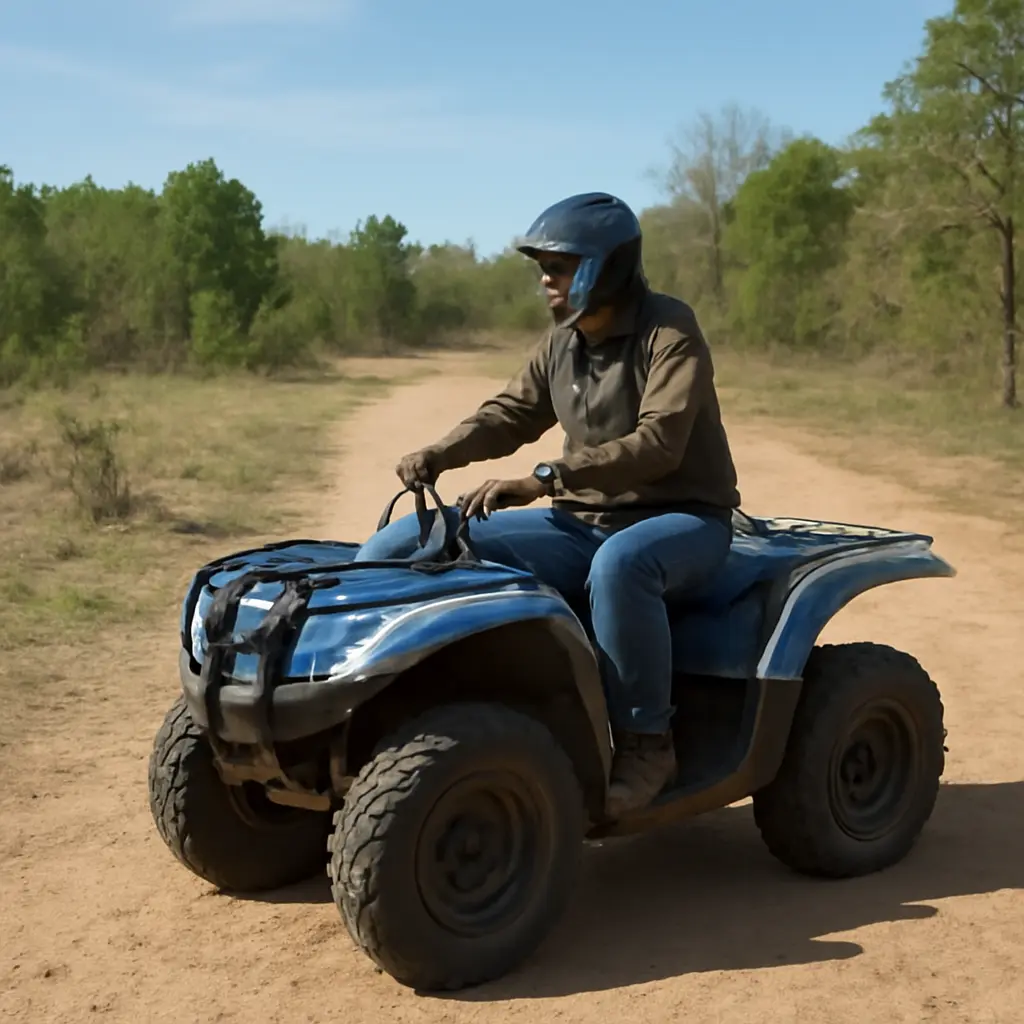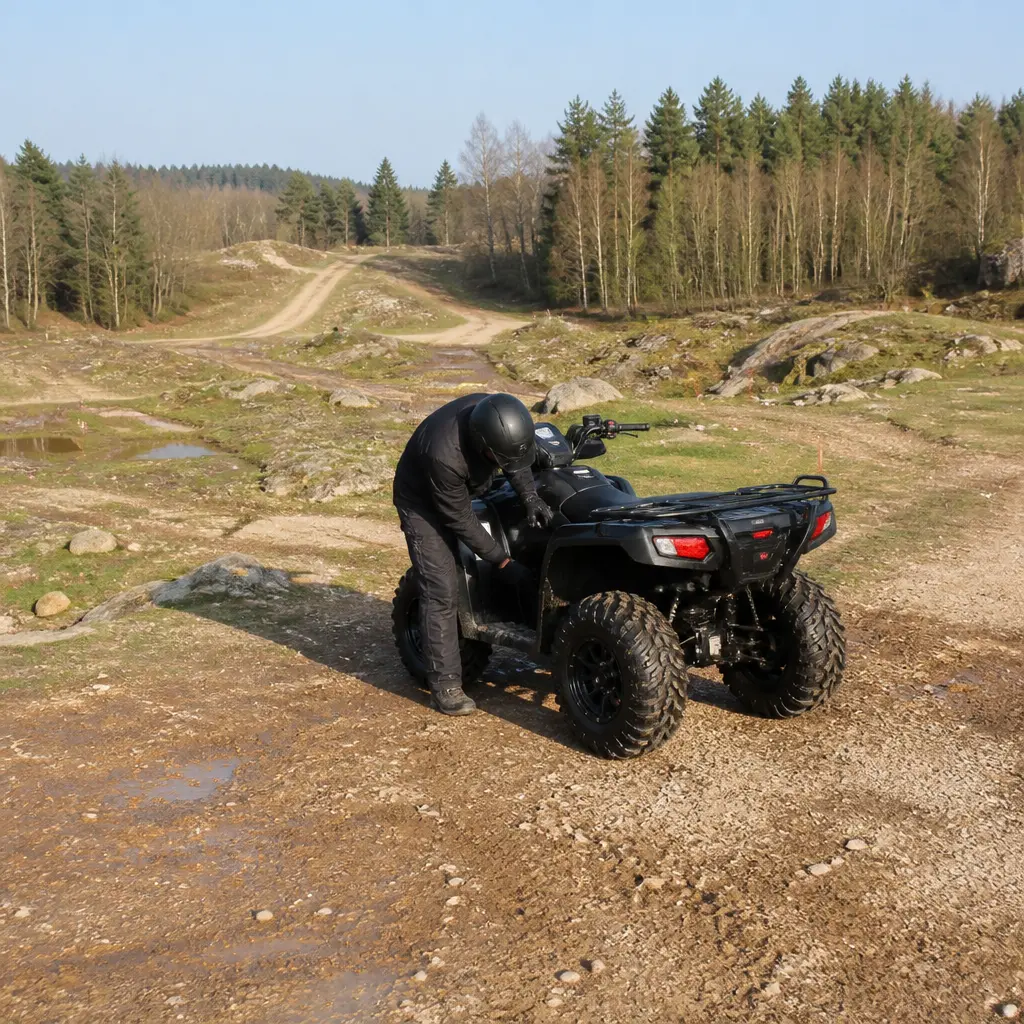
Switching from 2WD to 4WD is the practice of changing an ATV or UTV’s drivetrain from powering one axle to powering both axles when terrain, traction, or load demands it. Experienced riders commonly say they wish they had engaged 4WD earlier, used low range more deliberately, and understood that four-wheel drive improves forward traction but does not eliminate rollover, braking, or cornering risks. The key lessons are to shift before the difficult section, follow the manufacturer’s engagement procedure, avoid unnecessary 4WD on high-traction surfaces, and treat 4WD as a traction aid rather than a substitute for speed control and line selection. This matters because the U.S. Consumer Product Safety Commission reported hundreds of ATV-related fatalities and tens of thousands of emergency-department-treated injuries in recent annual estimates, making drivetrain knowledge part of responsible off-road riding.
Four-Wheel-Drive Traction Management: What the Attribute Means
Four-wheel-drive traction management is the deliberate selection of 2WD, 4WD, and sometimes 4WD low range to match available grip, terrain resistance, and vehicle speed. The National Highway Traffic Safety Administration describes ATVs as vehicles designed for off-road use with low-pressure tires and a straddle seating position; in practice, their drivetrain setting directly affects how engine torque reaches the ground. A 2WD ATV normally drives either the rear or front axle, while a 4WD ATV sends power to both axles through a selectable or automatic system.
The main hyponyms of this drivetrain attribute are selectable 4WD, on-demand 4WD, full-time 4WD, and 4WD low range. Selectable systems allow the rider to choose 2WD or 4WD. On-demand systems engage the additional axle when the vehicle detects wheel slip or a traction demand. Full-time systems continuously drive both axles, often through a differential or center coupling. Low range adds torque multiplication and slower wheel speed, making it useful for steep climbs, technical obstacles, towing, and controlled descents when the vehicle is designed for that use.
2WD: Efficient and Predictable on Firm Ground
Two-wheel drive is the appropriate default for many firm, level, and predictable surfaces. It reduces mechanical load, steering resistance, tire scrub, and fuel demand compared with continuously driving both axles. It can also make an ATV feel lighter and easier to turn because the front drivetrain is not actively pulling the vehicle through a corner.
Experienced riders generally remain in 2WD on hard-packed trails, dry gravel, pavement-approved access roads, and smooth ground where wheel slip is unlikely. The important qualification is that 2WD should not be preserved out of habit when the terrain is visibly changing. Waiting until the rear tires are already spinning can make engagement difficult, increase rut depth, and reduce the rider’s ability to maintain momentum.
Selectable and On-Demand 4WD: Different Engagement Behaviors
Selectable 4WD is a rider-controlled system operated by a switch, lever, or button. On-demand 4WD is a system that responds to detected slip or changing torque demand. These systems are not interchangeable: a selectable system may require the rider to engage it before entering mud or a climb, while an on-demand system may engage after slip has already begun.
The owner’s manual is the authoritative source for engagement speed and operating conditions. Some ATVs permit shifting while moving slowly and with the throttle released; others require the vehicle to stop. Forcing a selector, repeatedly applying throttle while the system is trying to engage, or shifting under heavy driveline load can damage gears, couplings, or shift mechanisms. A brief delay or indicator light is not necessarily a fault, but persistent grinding, flashing warnings, or failure to engage requires inspection.
When to Switch from 2WD to 4WD
The best time to switch is before the loss of traction, not after the vehicle is stuck. This principle connects drivetrain selection with terrain reading: the rider should look several vehicle lengths ahead and anticipate mud, loose rock, wet grass, ruts, cross-axle bumps, snow, sand, or a steep climb.
Mud, Sand, Snow, and Loose Gravel
Loose surfaces allow the tires to spin and displace material rather than generate forward motion. Engaging 4WD before entering these sections spreads the tractive effort across more tires and can reduce the tendency of the powered axle to dig holes. In sand, riders should use smooth throttle application and avoid abrupt steering. In mud, maintaining steady momentum is usually safer than using excessive speed, because a sudden throttle increase can bury the tires or cause the vehicle to yaw.
Four-wheel drive does not create grip where none exists. Tire condition, tire pressure, tread design, vehicle loading, and the rider’s line are equally important. A tire with worn tread or incorrect pressure may perform poorly even when all four wheels are powered.
Steep Climbs and Descents
A steep climb is a common reason to select 4WD before beginning the ascent. Power at both axles can reduce rear-wheel spin and help the vehicle track straight. Riders should approach squarely, keep their weight forward as appropriate for the model, maintain a controlled speed, and avoid stopping partway up unless necessary. If the ATV cannot climb safely, turning around on a slope may be hazardous; the safer response may be to back down in a controlled manner according to the manufacturer’s instructions.
On descents, 4WD can improve engine-braking control on systems designed to use it, but it does not replace the service brakes. The U.S. Occupational Safety and Health Administration and ATV safety organizations consistently emphasize controlled speed, terrain awareness, and avoiding slopes beyond the rider’s ability. A descending ATV can still slide or roll if the surface is slick, the wheels lock, or the rider turns sharply.
Ruts, Rocks, and Cross-Axle Obstacles
Ruts and uneven rocks can lift one or more tires, reducing the vehicle’s ability to transfer torque. Four-wheel drive helps when the drivetrain and differentials can keep useful torque reaching tires that remain in contact with the ground. However, a locked or mechanically coupled system may resist tight turns on high-grip surfaces, and a differential-lock feature can make steering heavier. Riders should use the least aggressive setting that reliably maintains traction.
A useful visual aid is a terrain-decision chart with three columns: surface condition, recommended drivetrain, and primary caution. For example, firm trail corresponds to 2WD and smooth cornering; loose climb corresponds to 4WD and steady throttle; extreme technical terrain may correspond to 4WD low and low-speed tire placement. The chart should be treated as a planning tool, not a replacement for the vehicle manual.
4WD Low Range and Torque Control
Four-wheel-drive low range is a gear reduction mode that trades speed for wheel torque and control. It is particularly valuable when the vehicle must move slowly against high resistance, such as climbing over rocks, pulling a moderate load, descending a steep grade, or crossing deep and consistent mud. Because low range increases torque at the wheels, it also increases the importance of gentle throttle inputs.
When Low Range Helps
- Technical rock sections where wheel placement matters more than speed.
- Steep climbs where high range requires excessive throttle or causes repeated wheel spin.
- Controlled descents where additional drivetrain resistance is appropriate for the model.
- Slow towing or work tasks that create sustained resistance.
Low range is not automatically safer. Excessive torque can break traction suddenly, stress axles, or make a small throttle movement produce a large response. Riders should select low range before the obstacle, release the throttle during the shift if instructed, and avoid changing ranges while the drivetrain is loaded unless the manufacturer specifically permits it.
What Experienced Riders Wish They Knew Earlier
Engage Before the Problem
The most repeated practical lesson is to engage 4WD while the ATV is still moving predictably. A rider who waits until the rear wheels are buried may have insufficient momentum, poor steering authority, and no level ground on which to troubleshoot. Scanning ahead and selecting the setting early is usually easier on the machine and less stressful for the rider.
4WD Does Not Prevent Rollover
Four-wheel drive improves propulsion, not stability. It does not make a side slope safe, prevent a rollover caused by a sharp steering input, or compensate for a high load mounted above the vehicle’s center of gravity. The Consumer Product Safety Commission’s ATV safety guidance stresses wearing a helmet and protective gear, carrying no passengers unless the ATV is designed for them, and taking an approved safety course. Those precautions remain necessary in 4WD.
Avoid 4WD Windup on High-Traction Surfaces
When a mechanically locked 4WD system is used on dry pavement or another high-grip surface, the front and rear axles may be forced to rotate at different effective speeds while cornering. If the system cannot relieve that difference, driveline windup can make steering heavy, cause hopping or binding, and place stress on drivetrain components. Riders should follow the manual’s restrictions and return to 2WD when extra traction is no longer needed.
Throttle, Tires, and Body Position Still Matter
A smooth throttle is more effective than aggressive acceleration because tire grip depends on the available friction between the tire and surface. Correct tire pressure preserves the contact patch and helps the tires conform to uneven ground. Body position also affects loading: riders may need to shift forward on climbs, rearward on descents, and uphill on side slopes, while keeping movements deliberate and maintaining a secure grip on the controls.
A Practical 2WD-to-4WD Riding Routine
- Inspect the tires, drivetrain selector, indicator lights, and fluid leaks before riding.
- Read the owner’s manual for the permitted engagement speed and shifting procedure.
- Scan the trail for changes in surface, slope, depth, and available escape routes.
- Select 4WD before loose, steep, muddy, or technical terrain begins.
- Use low range when slow control and torque are more important than speed.
- Apply steady throttle, avoid abrupt steering, and keep body position appropriate to the slope.
- Return to 2WD on firm, high-traction surfaces when the manual permits it.
- Stop and investigate abnormal noises, binding, warning lights, or failure to disengage.
Conclusion: Better Drivetrain Choices Create Safer Riders
Switching from 2WD to 4WD is fundamentally a decision about traction management. Two-wheel drive is efficient and maneuverable on firm ground; selectable or on-demand 4WD is useful before mud, sand, snow, loose gravel, ruts, and climbs; and low range provides controlled torque for slow, demanding terrain. The most valuable experience is learning to engage early, use the correct range, avoid drivetrain windup, and remember that 4WD cannot overcome poor line choice, excessive speed, inadequate tires, or unsafe body position.
Riders should practice the engagement procedure in a safe, open area, review the manufacturer’s manual, complete recognized ATV safety training, and treat every change in terrain as a reason to reassess speed, gear range, and traction. Understanding the drivetrain is not merely a performance advantage; it is part of the broader responsibility to reduce avoidable crashes and mechanical failures.
Sources: U.S. Consumer Product Safety Commission, All-Terrain Vehicle Safety; National Highway Traffic Safety Administration, All-Terrain Vehicle Safety; U.S. Occupational Safety and Health Administration, All-Terrain Vehicles; Specialty Vehicle Institute of America, ATV RiderCourse and ATV Safety Resources; Society of Automotive Engineers, Vehicle Drivetrain and Four-Wheel-Drive Terminology