Riding an all-terrain vehicle (ATV) for the first time can feel intimidating, but fear is easier to manage when you prepare, learn the controls, and begin at a pace that suits you. An ATV is a motorized vehicle designed for off-road travel, and it requires active steering and balance rather than simply sitting back and letting the machine do the work. The U.S. Consumer Product Safety Commission (CPSC) reported 548 ATV-related deaths in 2022, the latest year in its published fatality data, underscoring why training, protective gear, and controlled practice matter. This guide explains what makes first rides daunting, how to prepare safely, how to build confidence step by step, and when to pause or seek help.
Manage fear through ATV preparation and safety
Fear of riding an ATV is a normal response to unfamiliar controls, speed, uneven terrain, and uncertainty about what might happen. The CPSC describes ATVs as vehicles intended for off-road use and warns that they can be hazardous when operated improperly. That makes confidence a product of informed practice—not a reason to ignore risk or push beyond your ability.
Understand the main sources of first-ride anxiety
First-time riders commonly worry about losing control, tipping over, getting hurt, or holding up a group. These concerns can be reduced by separating the task into manageable parts: learning the controls while stopped, practicing on flat open ground, and adding turns or gentle slopes only when the basics feel predictable. If you feel panicked, stop in a safe place, switch off the engine, and take time to reset.
Choose a suitable ATV and qualified instruction
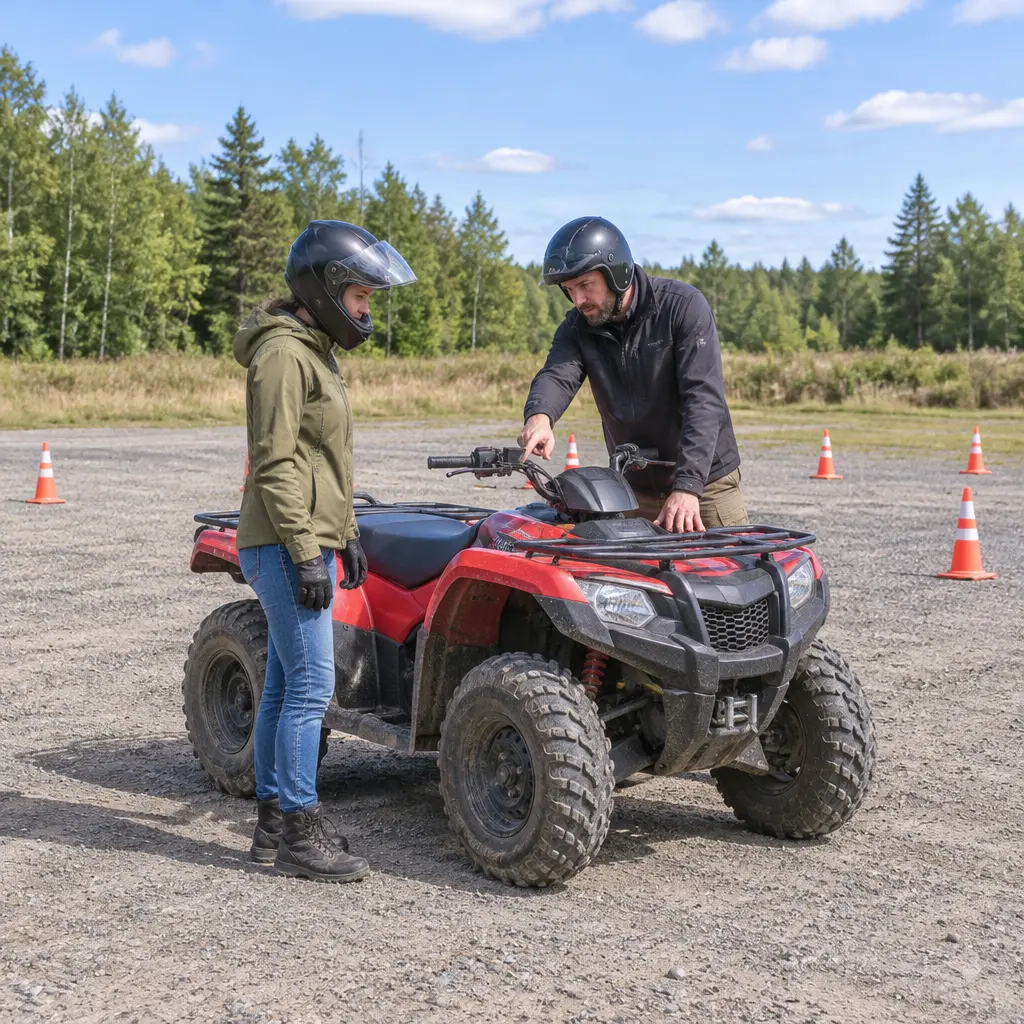
A suitable ATV should match the rider’s age, size, experience, and ability to operate its controls. The CPSC advises that children younger than 16 should not operate adult-sized ATVs; age-appropriate machines and adult supervision are essential. Ask a reputable rental provider or instructor to explain the specific model, demonstrate its controls, and help you select a beginner-friendly practice area. Do not ride as a passenger on a single-rider ATV.
Wear protective gear before you start
Protective equipment cannot eliminate risk, but it can reduce exposure to common riding hazards. Wear a properly fitting, standards-compliant helmet, eye protection, gloves, long sleeves, long pants, and over-the-ankle boots. The CPSC recommends helmets and protective clothing for ATV riders. Check the helmet’s fit and fastening, and do not ride if required equipment is missing or damaged.
Build ATV riding confidence with gradual practice
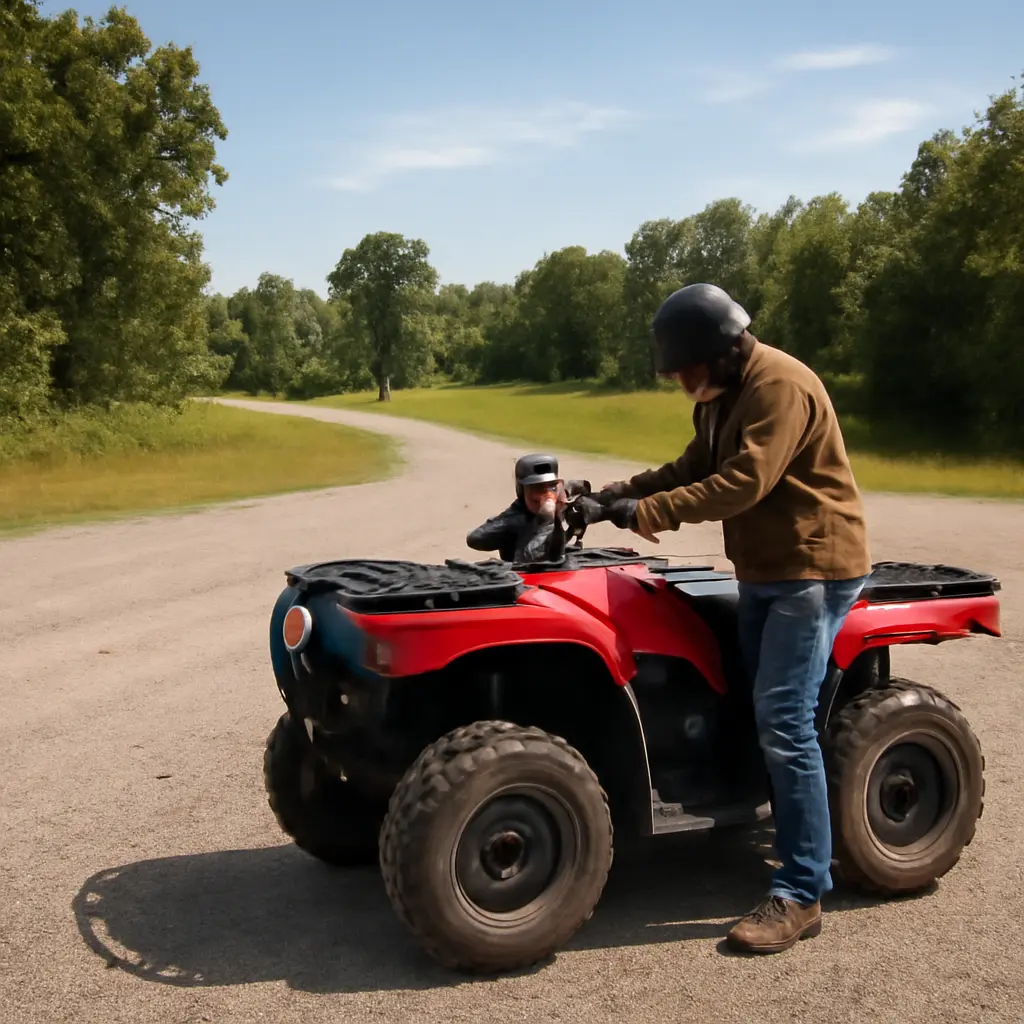
Confidence grows when each new skill builds on a familiar one. The ATV Safety Institute (ASI) provides hands-on rider training that covers controls, starting and stopping, turning, and other safe-riding skills. A beginner course is a practical option if you want structured coaching before riding on trails.
Learn the controls while the ATV is stationary
Before starting the engine, identify the throttle, brakes, engine stop switch, ignition, and any gear selector. Controls vary by model, so use the owner’s manual and the instructor’s demonstration rather than assuming every ATV operates alike. Sit in the riding position, check that you can reach the controls comfortably, and practice the motions with the machine off.
Start slowly on flat, open ground
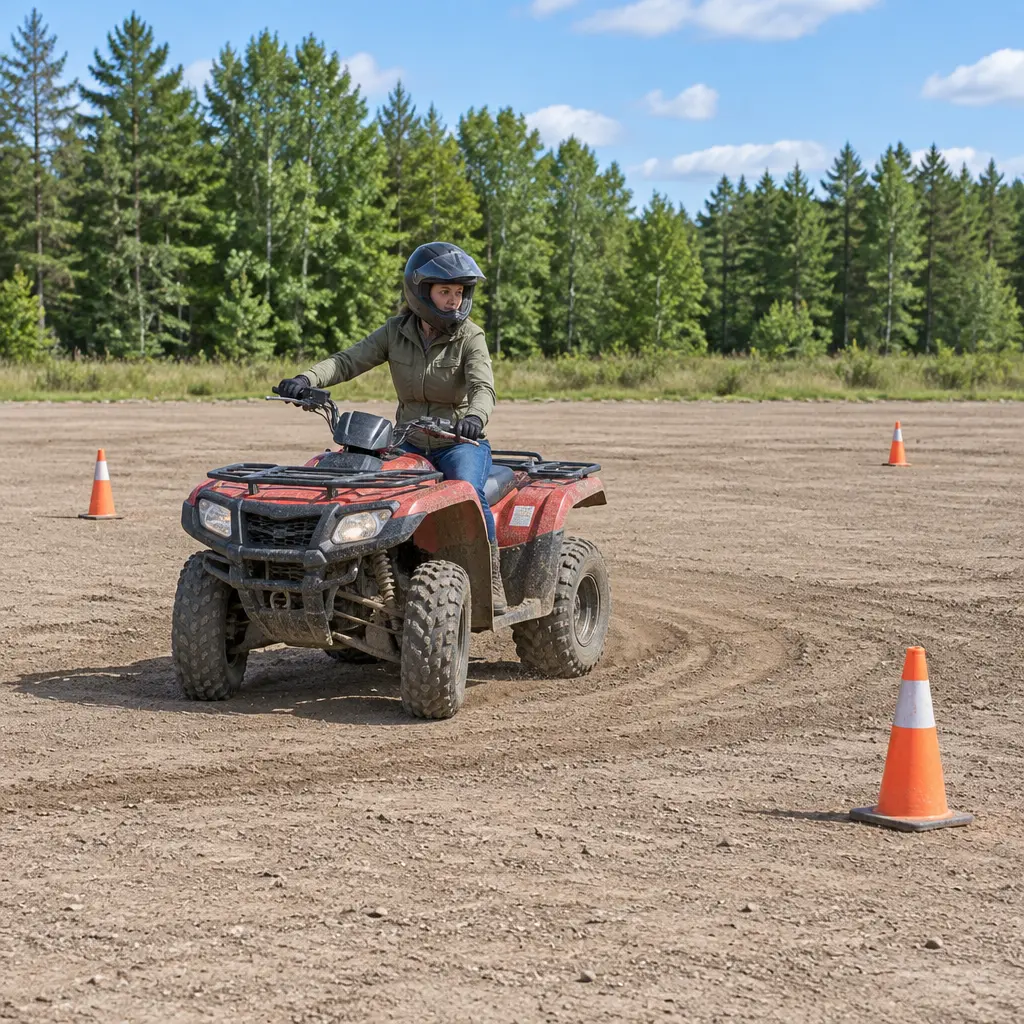
A clear, level area gives you room to practice without obstacles, traffic, steep slopes, or other riders nearby. Begin with an instructor’s guidance, use a low speed, and practice moving off and stopping smoothly. Repeat until the ATV responds predictably. Avoid public roads: ATVs are designed primarily for off-road use, and road legality varies by location.
Practice turns and terrain changes one step at a time
Once starting and stopping feel controlled, practice wide turns at low speed and follow the model-specific training instructions for rider posture and weight shifts. Add only mild terrain changes after you are comfortable on level ground. Do not attempt jumps, steep hills, deep water, or unfamiliar trails as a beginner. Never carry a passenger unless the ATV is specifically designed for more than one rider and the manufacturer permits it.
Use a first-ride plan to keep anxiety manageable
Set boundaries with your riding group
Tell your instructor or companions that you are new and agree on a slow pace, frequent stops, and a route suited to beginners. A responsible group will not pressure you to keep up, ride faster, or attempt terrain you have not practiced. If the group cannot accommodate those limits, do not ride with it.
Use a simple pre-ride checklist
- Confirm that the ATV is the right size and is in good working condition.
- Review the controls, owner’s manual, and emergency shutoff procedure.
- Wear a helmet and appropriate protective clothing.
- Choose a legal, open practice area away from roads and hazards.
- Check weather and visibility, and avoid riding when tired or impaired.
- Ride with supervision or a qualified instructor, especially during practice.
Know when to stop or postpone
Stop if fear becomes overwhelming, you cannot reliably operate the controls, the ATV feels unsuitable, or conditions change. Fatigue, alcohol, drugs, poor visibility, and pressure from others impair judgment and increase danger. You can end a session and try again after more instruction; choosing not to continue is a sound safety decision, not a failure.
Conclusion: Make ATV confidence a result of safe practice
Overcoming fear of riding an ATV for the first time does not mean eliminating caution. It means understanding the vehicle, choosing an appropriate machine, wearing protective gear, getting qualified instruction, and practicing gradually in a controlled setting. CPSC fatality data show that ATV riding carries real risks, while ASI training offers a structured way to learn essential skills. Before your first ride, review the owner’s manual, arrange beginner instruction, and give yourself permission to proceed slowly—or stop when you need to.
Sources: U.S. Consumer Product Safety Commission, ATV Safety Information Center, https://www.cpsc.gov/Safety-Education/Safety-Education-Centers/ATV-Safety-Information-Center; U.S. Consumer Product Safety Commission, 2022 Annual Report of ATV-Related Deaths and Injuries, https://www.cpsc.gov/s3fs-public/2022-Annual-Report-of-ATV-Related-Deaths-and-Injuries.pdf; ATV Safety Institute, ATV RiderCourse, https://atvsafety.org/atv-ridercourse/.