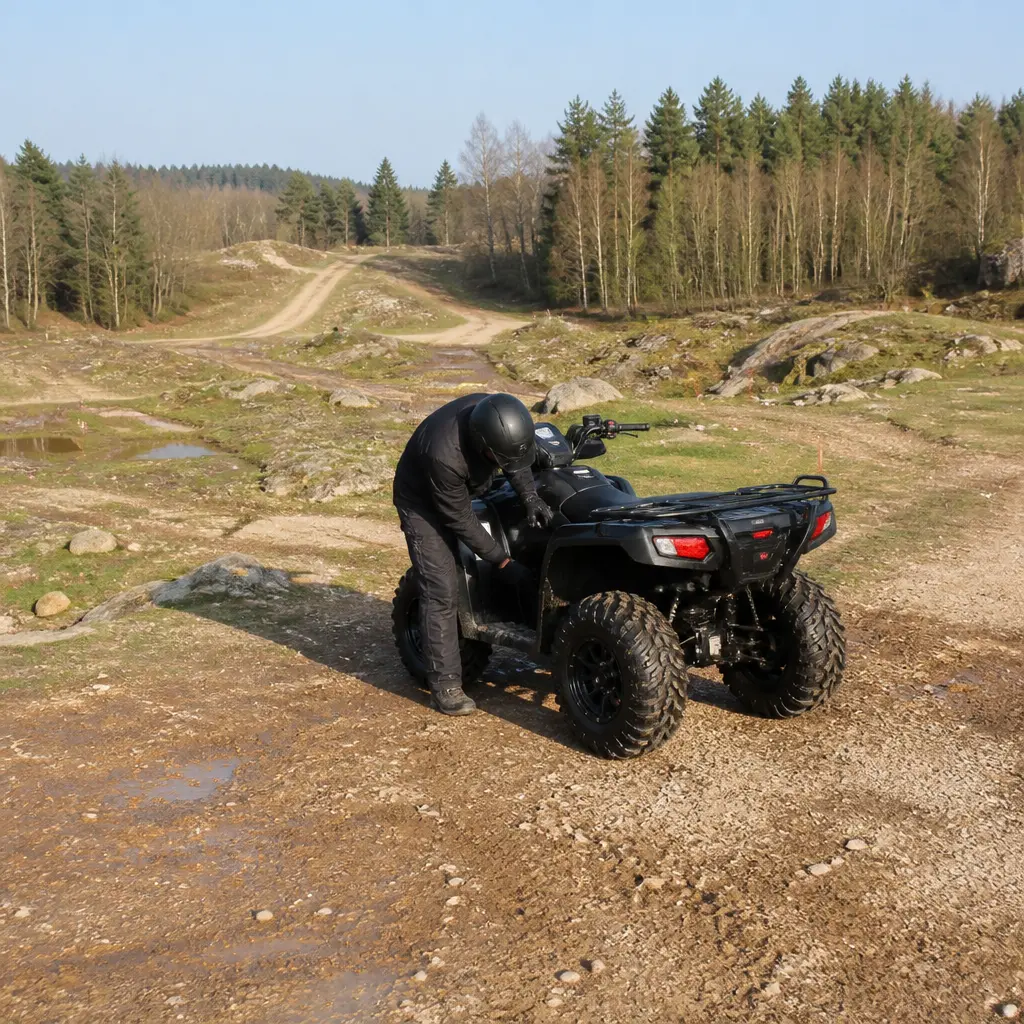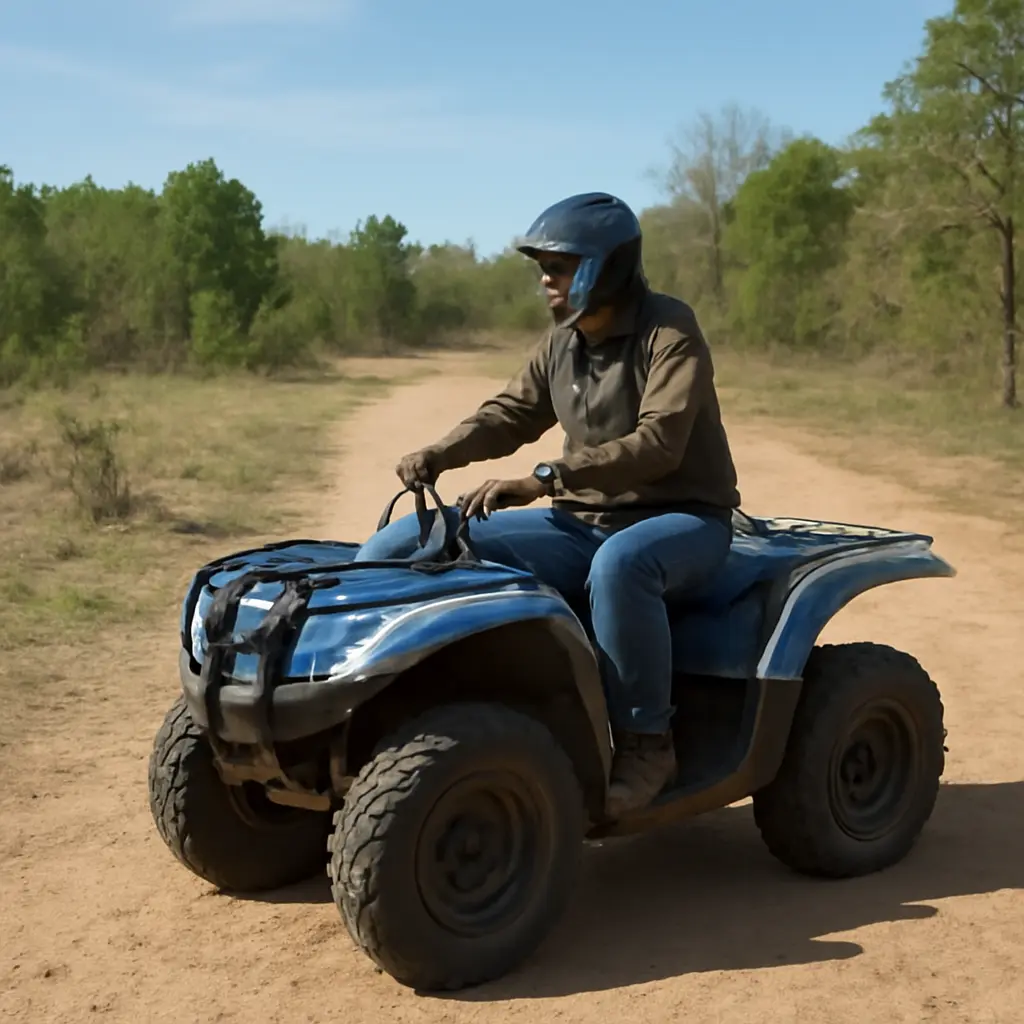
All-terrain vehicle (ATV) riding fundamentals are the skills and safety practices that help a rider control a four-wheeled off-highway vehicle across changing terrain. For new riders, the essentials are taking hands-on training, wearing a properly fitted helmet and protective gear, learning the controls, riding at a manageable speed, and adapting technique to hills, turns, and surfaces. These measures matter: the U.S. Consumer Product Safety Commission (CPSC) reported 525 ATV-related deaths in 2022, the latest year in its annual fatality estimates cited here, and continues to warn that ATVs are not risk-free recreational vehicles. The sections below explain training, protective equipment, basic controls, terrain skills, and practical steps for responsible riding.
ATV Riding Fundamentals: Training and Rider Readiness
Rider readiness is the combination of instruction, physical and mental preparation, and choosing a vehicle suited to the rider. The ATV Safety Institute (ASI) frames its safety guidance around key practices that include taking a hands-on course, riding an ATV designed for the operator’s age, wearing protective gear, and never riding on public roads. These fundamentals are especially important for beginners because steering and balance differ from those of a car or motorcycle, while terrain can change quickly.
Take an approved hands-on course
An ATV safety course teaches basic control, hazard awareness, turning, braking, and riding on varied terrain under an instructor’s supervision. ASI offers hands-on training for eligible riders, and state agencies or local organizations may offer additional options. A course is not a substitute for careful riding, but it gives beginners a safer place to learn before they encounter unfamiliar trails. Check current course availability and local requirements before riding.
Choose an age-appropriate ATV
An age-appropriate ATV is a vehicle whose size and power are intended for the rider’s age group, as specified by its manufacturer and relevant safety guidance. A rider should be able to reach and operate the controls while maintaining a stable posture; a larger machine is not a suitable shortcut to greater capability. The CPSC warns against carrying passengers on single-rider ATVs and against allowing children to ride adult-sized models. Follow the specific vehicle’s manual, age recommendations, and applicable laws.
Prepare yourself and the ride
Read the owner’s manual, inspect the vehicle, check weather and trail conditions, and tell someone where you plan to ride and when you expect to return. Avoid riding when tired, impaired, or distracted. Beginners should start on a designated, relatively level practice area, remain within their skill level, and ride with a responsible companion rather than alone.
ATV Riding Fundamentals: Protective Gear and Vehicle Checks
Protective equipment reduces exposure to impact, abrasion, debris, and weather, while a pre-ride inspection can reveal problems before they become failures on the trail. ASI recommends a helmet, eye protection, gloves, long sleeves, long pants, and over-the-ankle boots. Gear cannot eliminate injury risk, but it is an essential layer of prevention.
Wear a helmet and protective clothing
Use a properly fitted, standards-compliant helmet and secure its chin strap. Add goggles or a face shield, gloves, a long-sleeved shirt, long pants, and sturdy over-the-ankle footwear. Avoid loose clothing, dangling straps, and footwear that can slip off or catch on controls. The National Highway Traffic Safety Administration (NHTSA) identifies helmet use as a central part of motorcycle safety; ATV riders should follow ATV-specific guidance and local regulations as well.
Inspect the ATV before each ride
A pre-ride inspection is a brief check of the machine’s condition and operating systems. Use the manual’s checklist and verify that tires are in sound condition and properly inflated, controls work, brakes respond, lights function when fitted, and there are no visible leaks or loose parts. Confirm that the fuel cap is secure and that the machine is appropriate for the terrain. If a control or safety system is damaged, do not ride until it is repaired.
Carry basic safety supplies
For a planned ride, consider carrying water, a first-aid kit, a charged phone or communication device, and tools or a repair kit appropriate to the vehicle and route. A map or offline navigation aid can help when coverage is limited. Pack supplies securely so they cannot interfere with steering, braking, or the rider’s movement.
ATV Riding Fundamentals: Controls, Balance, and Speed
ATV control depends on smooth inputs and active body positioning. Unlike a car, an ATV does not protect its rider with a passenger compartment, and its handling changes with speed, surface, slope, and load. Beginners should learn the location and operation of every control from the owner’s manual before starting the engine.
Learn the controls before moving
Controls vary by model, but commonly include a throttle, brakes, steering handlebars, engine stop switch, and transmission selector. Practice starting, stopping, and selecting gears in a clear, flat area. Keep hands and feet positioned as the manual specifies, and do not assume that the controls match those on another ATV. If anything feels unfamiliar or does not respond normally, stop and ask a qualified instructor or mechanic.
Use smooth inputs and active body position
Smooth throttle, braking, and steering help preserve traction and stability. On a turn, reduce speed before entering, look toward the intended path, and shift body weight as taught in an approved course. On uneven ground, keep a balanced stance and adjust position to the terrain without making abrupt movements. Exact techniques can vary with ATV design and conditions, so practice them under qualified supervision rather than relying on a single rule for every situation.
Keep speed within visibility and stopping distance
A safe speed is one that allows the rider to see hazards and stop or steer around them in the available space. Slow down for loose gravel, mud, wet ground, ruts, vegetation, blind corners, and unfamiliar trails. Leave room between vehicles, avoid sudden maneuvers, and stop if dust or darkness reduces visibility. Speed limits and trail rules vary by location; obey posted signs and local regulations.
ATV Riding Fundamentals: Terrain and Trail Technique
Terrain technique means adjusting speed, line choice, and body position to the surface and slope. Beginners should first build confidence on open, stable ground, then progress gradually with instruction. A trail that looks manageable from a distance may contain hidden rocks, washouts, soft shoulders, or sudden changes in grade.
Turns and uneven surfaces
For a turn, approach at a controlled speed, scan the route, and follow the training method appropriate to the ATV and terrain. On uneven surfaces, avoid sharp steering or aggressive acceleration, which can reduce control. If a trail becomes too difficult, stop in a safe place and choose another route rather than attempting an obstacle beyond your ability.
Hills and slopes
Hill riding requires particular caution because a loss of traction or an incorrect weight shift can lead to a rollover. Do not attempt a slope unless it is permitted, visible, and within your training and the ATV’s limits. Learn ascent, descent, and side-hill procedures from an instructor and the owner’s manual; the correct response depends on the machine, slope, and surface. Avoid steep, slippery, or obstructed hills, and never ride beyond the point where you can safely turn around or stop.
Stay on designated trails
Designated trails help riders avoid sensitive habitat, private property, and unexpected hazards. The U.S. Forest Service advises off-highway vehicle users to stay on routes open to their vehicle type and to follow local travel-management rules. Do not ride on paved public roads unless local law specifically permits it; ATVs are generally not designed for ordinary road traffic, and road use introduces conflicts with larger, faster vehicles.
ATV Riding Fundamentals: Common Hazards and Safety Rules
Common preventable hazards include excessive speed, riding on roads, carrying passengers on a single-rider ATV, operating an adult-size vehicle as a child, and riding without a helmet. CPSC’s ATV safety guidance emphasizes that ATVs are not toys and that vehicle design, rider behavior, and terrain all affect risk. The safest choice is to treat every ride as a task requiring preparation and sound judgment.
Do not carry an unapproved passenger
A single-rider ATV is designed for one operator, and an extra person can interfere with control and stability. Carry a passenger only on a model specifically designed for two riders, and follow its instructions and applicable rules. Never carry a child in a way the manufacturer does not permit.
Avoid alcohol, drugs, and distractions
Alcohol, recreational drugs, impairing medications, fatigue, and phone use can slow decisions or disrupt coordination. Keep attention on the trail and stop in a safe location before using a phone. If you are not alert enough to respond quickly to changing ground, postpone the ride.
Respect weather and environmental conditions
Rain, snow, heat, cold, and poor visibility change traction and rider endurance. Check forecasts, avoid conditions beyond your experience, and turn back when the trail becomes unsafe. Protect natural areas by avoiding closed routes, wetlands, and fragile vegetation, and follow local rules for noise, fire risk, and waste.
Conclusion: Build ATV Skills Gradually and Ride Responsibly
Safe ATV riding begins with training and an age-appropriate vehicle, continues with protective gear and a pre-ride inspection, and depends on smooth control, appropriate speed, and terrain-aware decisions. CPSC fatality estimates show why these fundamentals deserve attention: an ATV can cause severe injury or death when riders underestimate its risks. New riders should take an approved hands-on course, read the owner’s manual, practice on easy ground, and follow local trail rules. For further guidance, consult the ATV Safety Institute, CPSC, and the land manager responsible for the riding area.
Sources: U.S. Consumer Product Safety Commission, ATV Safety, https://www.cpsc.gov/Safety-Education/Safety-Education-Centers/ATV-Safety; U.S. Consumer Product Safety Commission, ATV-Related Deaths and Injuries, https://www.cpsc.gov/Research–Statistics/Injury-Statistics; ATV Safety Institute, ATV Safety, https://atvsafety.org/; National Highway Traffic Safety Administration, Motorcycle Safety, https://www.nhtsa.gov/vehicle-safety/motorcycles; U.S. Forest Service, Off-Highway Vehicle Recreation, https://www.fs.usda.gov/visit/know-before-you-go/off-highway-vehicle-recreation