Long ATV rides can leave riders tired, sore, or with tingling and numb hands. These symptoms often arise from a mix of sustained gripping, vibration, awkward wrist posture, and whole-body fatigue—not simply from “weak hands.” The National Institute for Occupational Safety and Health (NIOSH) identifies hand-transmitted vibration as a workplace exposure associated with vascular and nerve disorders, although occupational research does not establish a universal safe exposure limit for recreational ATV riding. Practical steps include improving fit and posture, relaxing the grip, taking breaks, maintaining the machine, and responding promptly to persistent numbness. The guidance below explains the likely causes, ways to reduce exposure, ride-planning strategies, and warning signs that warrant medical assessment.
ATV hand numbness and fatigue: causes and riding factors
Hand numbness is a reduced or altered sensation—such as tingling, “pins and needles,” or loss of feeling—while fatigue is a decline in physical or mental capacity to sustain effort. During ATV riding, these can occur together because the hands must steer, operate controls, and absorb repeated jolts while the rider maintains a stable posture. The exact cause cannot be diagnosed from symptoms alone; pressure on a nerve, vibration, cold, a tight grip, or an unrelated medical condition may contribute.
Vibration, grip force, and pressure
Hand-arm vibration is mechanical vibration transmitted from a tool or vehicle through the hands and arms. NIOSH and the UK Health and Safety Executive describe prolonged occupational exposure as a risk factor for hand-arm vibration syndrome, which can involve numbness, tingling, reduced dexterity, and—in some cases—episodes of finger blanching in cold conditions. Those occupational findings are relevant to understanding vibration, but they do not quantify the risk from a particular ATV or recreational ride.
A rider may also compress nerves by gripping the bars too tightly or resting body weight on the hands. Repeated pressure at the palm or wrist can irritate nerves, while sustained wrist bending can increase discomfort. A numb thumb, index, and middle finger can be consistent with median-nerve irritation; symptoms affecting the ring and little fingers can be consistent with ulnar-nerve irritation. These patterns are clues, not a diagnosis, and symptoms can have other causes.
Posture, terrain, and total-body fatigue
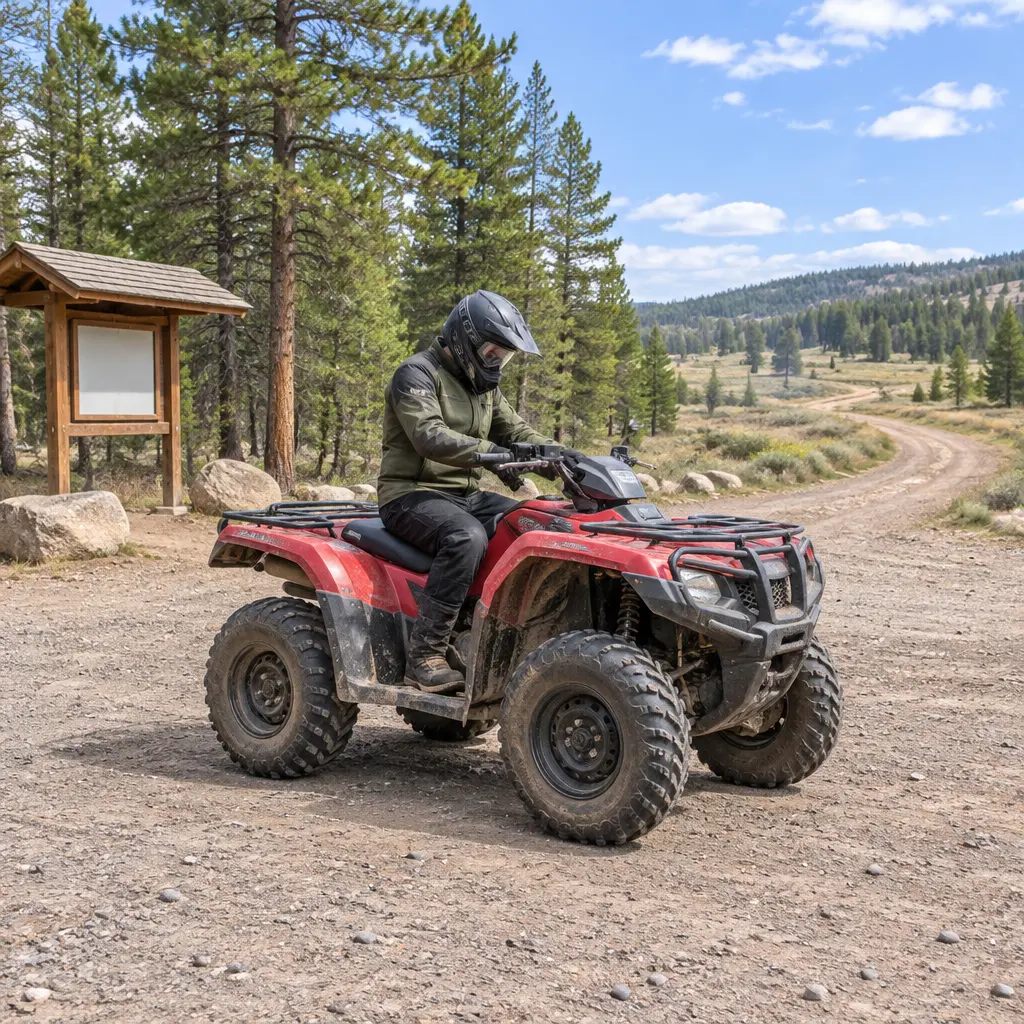
A neutral riding position keeps wrists relatively straight, elbows slightly bent, shoulders relaxed, and the torso supported by the legs and core rather than hanging heavily on the handlebars. Rough terrain, prolonged seated riding, poorly positioned controls, and a machine that does not fit the rider can make this posture harder to maintain. As fatigue builds, riders may brace with their arms, squeeze the grips harder, and react less smoothly to bumps, creating a cycle of greater effort and discomfort.
The U.S. Consumer Product Safety Commission’s ATV safety guidance emphasizes training, appropriate protective gear, and riding within the machine’s limits. Its national injury surveillance data also show that ATV-related injuries are a substantial safety concern; those figures are not specific to hand numbness, but they underline why fatigue management should be treated as part of safe riding rather than merely a comfort issue.
Riding adjustments that reduce hand strain
Reducing hand symptoms means lowering avoidable pressure and vibration while preserving secure control. No single glove, handlebar, or accessory can eliminate exposure, and modifications should never interfere with steering, braking, throttle return, or the manufacturer’s safety instructions.
Fit the controls and maintain a relaxed grip
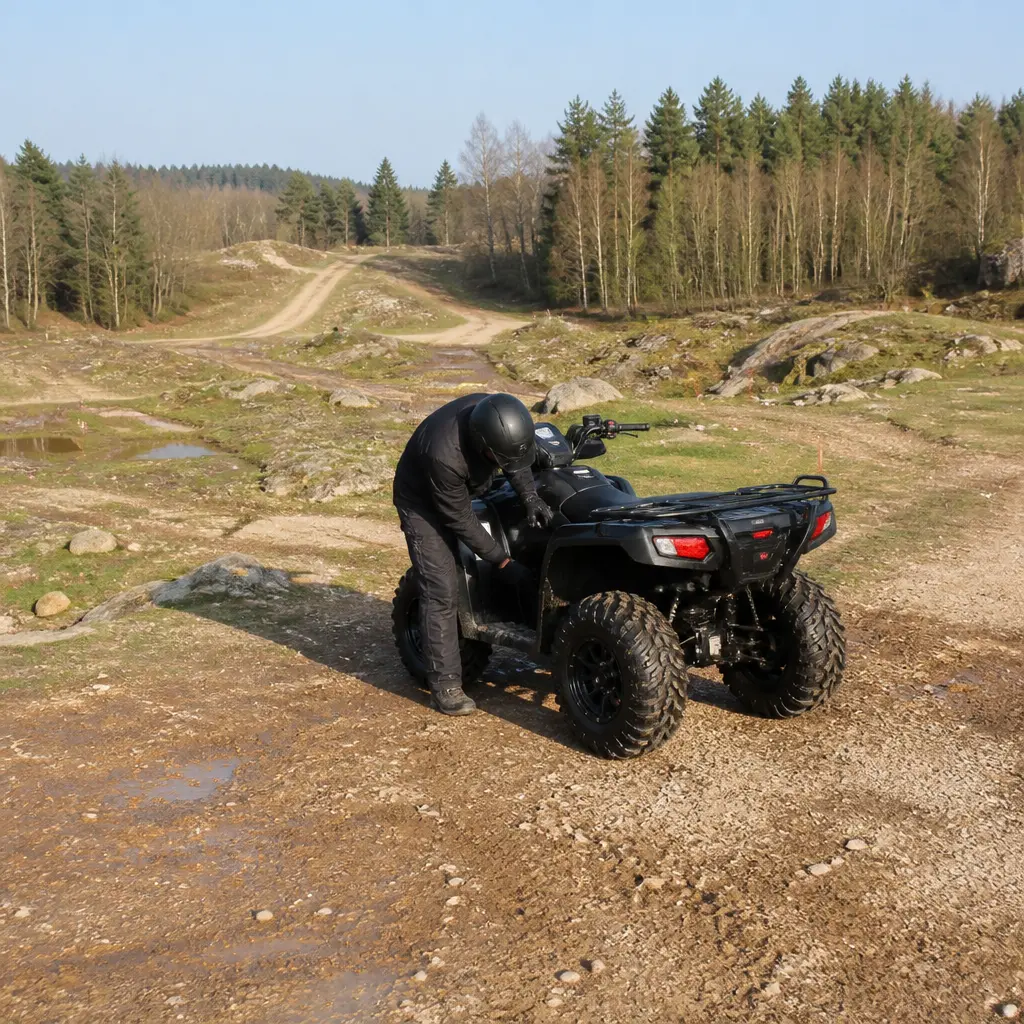
Set up the ATV so the controls are reachable without locking the elbows, stretching the wrists, or leaning heavily on the bars. Check that the handlebar position and lever angles allow a comfortable, near-straight wrist when seated and standing. Keep the grip secure but not clenched; use the legs and core to stabilize the body, and let the arms guide rather than support the rider’s full weight.
- Before riding, confirm that the throttle, brakes, steering, and grips operate as intended.
- On suitable terrain, periodically loosen unnecessary tension and gently move the fingers while retaining control.
- Choose gloves that fit without bunching or compressing the palm; gloves can improve comfort and protection but are not a substitute for reducing vibration or taking breaks.
- Do not add bar weights, risers, guards, or other parts unless they are compatible with the ATV and installed according to the manufacturer’s instructions.
Reduce vibration at its source
Vehicle condition and route choice affect the vibration and impact reaching the rider. Follow the owner’s manual for inspections and maintenance, including tires, wheels, suspension, steering, and engine components. A damaged tire, loose part, or mechanical fault can create abnormal vibration and should be addressed before continuing. Where possible, choose a smoother route, avoid unnecessary high-speed impacts, and ride within the ATV’s design and the rider’s skill level.
Vibration varies with machine design, speed, surface, tire condition, and how the rider holds the bars. Without measurements for the particular ATV and route, it is not possible to claim that a specific riding duration or accessory makes exposure safe. Treat new, unusually strong, or worsening vibration as a reason to stop and inspect the machine.
Breaks, preparation, and fatigue management
A planned break interrupts continuous gripping and gives the rider an opportunity to notice early symptoms before control is affected. There is no evidence-based break interval that applies to every ATV, rider, and route, so use symptoms, terrain, conditions, and the machine’s manual to guide decisions. Breaks are especially important when riding in cold weather, over rough ground, or for longer than the rider is accustomed to.
Plan ride segments and recovery
Before setting out, plan realistic ride segments, rest stops, water, and a return route. Avoid extending a ride simply to reach a target distance if fatigue is affecting attention or control. At a safe stopping point, take both hands off the bars, change posture, and gently open and close the hands. Do not use forceful stretching or continue riding to “work through” increasing numbness.
- Start rested and avoid riding when impaired by alcohol, drugs, illness, or severe sleep loss.
- Warm up gradually and check that clothing and gloves do not restrict circulation or wrist movement.
- Schedule stops before symptoms become distracting; stop sooner if tingling, pain, or weakness appears.
- After a break, resume only when sensation and control have returned and the ATV is operating normally.
Hydration, temperature, and general conditioning
Heat, cold, dehydration, and overall exertion can worsen discomfort or reduce concentration, even though they do not explain every case of numbness. Dress for the weather, carry water, and avoid tight cuffs or gloves that constrict the hands. General strength and conditioning may help a rider maintain posture, but fitness does not prevent all nerve compression or vibration-related symptoms.
When hand numbness needs medical attention
Temporary tingling that resolves after stopping may result from posture or pressure, but recurring, persistent, or worsening symptoms deserve professional assessment. A clinician can evaluate nerve, circulation, neck, or other possible causes and advise whether riding should be limited. The American Academy of Orthopaedic Surgeons notes that hand numbness and tingling can occur with conditions such as carpal tunnel syndrome, but similar symptoms may arise from other disorders.
Stop riding and assess symptoms
Stop in a safe place if numbness compromises grip, finger control, braking, or steering. Do not continue on the assumption that symptoms will disappear while riding. Arrange medical advice if numbness persists after the ride, repeatedly returns, is accompanied by pain or weakness, or affects ordinary activities.
Seek urgent care for red flags
Sudden numbness with weakness, facial drooping, difficulty speaking, severe dizziness, or other stroke-like symptoms requires emergency services. A hand that becomes unusually pale or blue, very cold, severely painful, or suddenly weak also needs urgent evaluation. These symptoms should not be attributed to routine riding fatigue without medical assessment.
Conclusion: safer rides with less fatigue and numbness
ATV hand fatigue and numbness can reflect the combined effects of vibration, sustained gripping, pressure, posture, terrain, and overall exertion. A better-fitting riding position, relaxed grip, sound machine maintenance, suitable routes, and planned breaks can reduce avoidable strain, while symptoms that persist or affect control call for stopping and medical advice. Because occupational vibration research does not establish a universal safe exposure for recreational ATV use, riders should not rely on a single accessory or fixed time limit. Review the ATV owner’s manual, ride within your ability, and seek clinical guidance for recurring symptoms.
Sources: National Institute for Occupational Safety and Health, Criteria for a Recommended Standard: Occupational Exposure to Hand-Arm Vibration, https://www.cdc.gov/niosh/docs/83-110/; UK Health and Safety Executive, Hand-arm vibration at work, https://www.hse.gov.uk/vibration/hav/; U.S. Consumer Product Safety Commission, All-Terrain Vehicle Safety, https://www.cpsc.gov/Safety-Education/Safety-Education-Centers/ATV-Safety-Information-Center; American Academy of Orthopaedic Surgeons, Carpal Tunnel Syndrome, https://orthoinfo.aaos.org/en/diseases–conditions/carpal-tunnel-syndrome/