An ATV’s stability on a steep incline depends largely on where its combined center of gravity (CG) sits relative to the tire contact patches, the slope, and the direction of travel. The CG is the point at which the combined mass of the machine and rider can be treated as acting; as a slope or maneuver shifts the support available beneath the tires, the ATV can tip if the effective line of gravity moves beyond that support area. This explains why uphill, downhill, and sidehill travel pose different risks, and why rider position, load placement, tire traction, and terrain all matter. The Consumer Product Safety Commission (CPSC) reported an estimated 93,700 ATV-related emergency-department-treated injuries in the United States in 2022, underscoring the importance of understanding stability rather than relying on a single “safe” slope angle.
How Center of Gravity Determines ATV Stability on Steep Inclines
Center of gravity is a useful way to understand tipping, but it is not a fixed point that guarantees safety. The combined ATV-and-rider CG changes with rider posture, cargo, accessories, and movement. On an incline, gravity still acts vertically toward Earth; the vehicle’s orientation and the shape of its tire-support area determine whether the resulting forces and moments can be resisted. Traction and suspension movement further affect whether the tires remain planted.
The support area and the tipping threshold
The support area is the region bounded by the tire contact patches. In a simplified static model, an ATV is more resistant to tipping when the vertical projection of its combined CG remains inside that region. As it approaches an edge, the restoring moment decreases; when the projection passes beyond an edge, gravity can create a tipping moment. This model is a teaching aid, not a field method for calculating a safe slope: real outcomes also depend on tire grip, uneven ground, suspension travel, speed, steering, and sudden rider movement.
Why a higher CG reduces stability margin
A higher CG generally gives a lateral or longitudinal force a longer lever arm with which to create a tipping moment. A tall load, heavy accessory, or rider positioned high can therefore reduce the margin for error, especially on uneven terrain. Conversely, keeping cargo low and secured helps avoid unnecessary increases in CG height. This does not make a steep slope safe: a low CG cannot compensate for inadequate traction, an abrupt rut, or an excessive grade.
Stability is not the same as traction
An ATV may lose traction before it reaches a geometric tipping threshold. Mud, loose gravel, wet grass, snow, and side-sloped surfaces can cause tires to slide, changing the vehicle’s path and loading its tires unpredictably. Conversely, a tire can grip strongly enough to resist sliding while the machine continues to rotate around its downhill tires. Operators need to consider both rollover resistance and the ability to maintain controlled tire contact.
How Slope Direction Changes ATV Center-of-Gravity Risk
Inclines present different stability problems depending on whether the ATV is traveling uphill, downhill, or across the slope. The key distinction is the direction in which gravity and vehicle motion load the support area. Manufacturer instructions vary by model, so the owner’s manual—not a general rule of thumb—should guide operation.
Uphill travel
On an uphill climb, the machine’s weight shifts toward the rear relative to the slope, reducing load on the front tires. A steep or abrupt climb can lift the front end or cause a backward rollover, particularly if the rider accelerates sharply, encounters an obstacle, or carries rear-heavy cargo. A cautious approach, steady control, and compliance with the manufacturer’s hill-climbing guidance are essential. If a hill appears too steep or its surface is uncertain, do not attempt it.
Downhill travel
Descending shifts load toward the front, while gravity can accelerate the ATV and reduce the operator’s ability to control speed. Braking too abruptly may lock or skid a tire; losing control can lead to a sideways slide or rollover. Use the braking and descent technique specified in the manual, travel at a controlled speed, and avoid turning sharply or crossing an obstacle in a way that destabilizes the machine.
Sidehill travel and lateral rollover
A sidehill places the downhill tires at greater risk of carrying excessive load while the uphill tires become lightly loaded. If the combined CG’s effective projection moves beyond the downhill side of the support area—or if the tires slide and suddenly regain grip—the ATV can roll laterally. A rut, rock, hole, or abrupt steering input may sharply increase this risk. Because sidehill stability is highly sensitive to terrain and rider movement, avoid crossing slopes that exceed the limits in the owner’s manual; do not treat a universal angle as safe for every ATV.
How Rider Position and Load Affect ATV Stability
The rider is part of the combined vehicle mass, so posture can change the CG’s position. Rider movement is a control aid, not a substitute for choosing suitable terrain or obeying operating limits. Passenger and cargo arrangements also matter because they alter weight distribution and may affect the machine’s designed capacity.
Rider posture on slopes
Training materials commonly teach riders to shift their weight uphill when crossing a slope and forward or backward as directed for climbs and descents. The purpose is to help keep the combined mass appropriately positioned and maintain tire contact. Exact posture instructions differ among models and slope situations; follow the manufacturer’s manual and hands-on safety training. Do not make sudden movements, lean so far that control is compromised, or assume shifting can prevent a rollover on terrain beyond the ATV’s capability.
Cargo, accessories, and passengers
Cargo mounted high or far from the machine’s center can raise or offset the combined CG. Loads that shift during travel create additional instability. Secure cargo, distribute it as the manual specifies, and stay within the machine’s stated weight limits. Never carry a passenger on an ATV designed for one rider; CPSC safety guidance warns against carrying passengers on single-rider models because an extra occupant can impair control and increase injury risk.
Tire pressure and suspension condition
Tires and suspension influence how the ATV maintains contact with uneven ground. Incorrect tire pressure, damaged tires, worn components, or unsuitable tires can impair handling and traction. Use the pressure and maintenance specifications in the owner’s manual, inspect the ATV before riding, and avoid modifications that raise the machine or otherwise alter its handling unless the manufacturer approves them.
How to Reduce Rollover Risk on Steep Terrain
No single posture, speed, or angle makes steep terrain safe in every situation. A practical risk-reduction approach combines route choice, equipment checks, operator training, and a willingness to turn back. The Recreational Off-Highway Vehicle Association and ATV manufacturers emphasize instruction and model-specific operating guidance; CPSC also recommends appropriate protective equipment and responsible riding practices.
Assess the route before committing
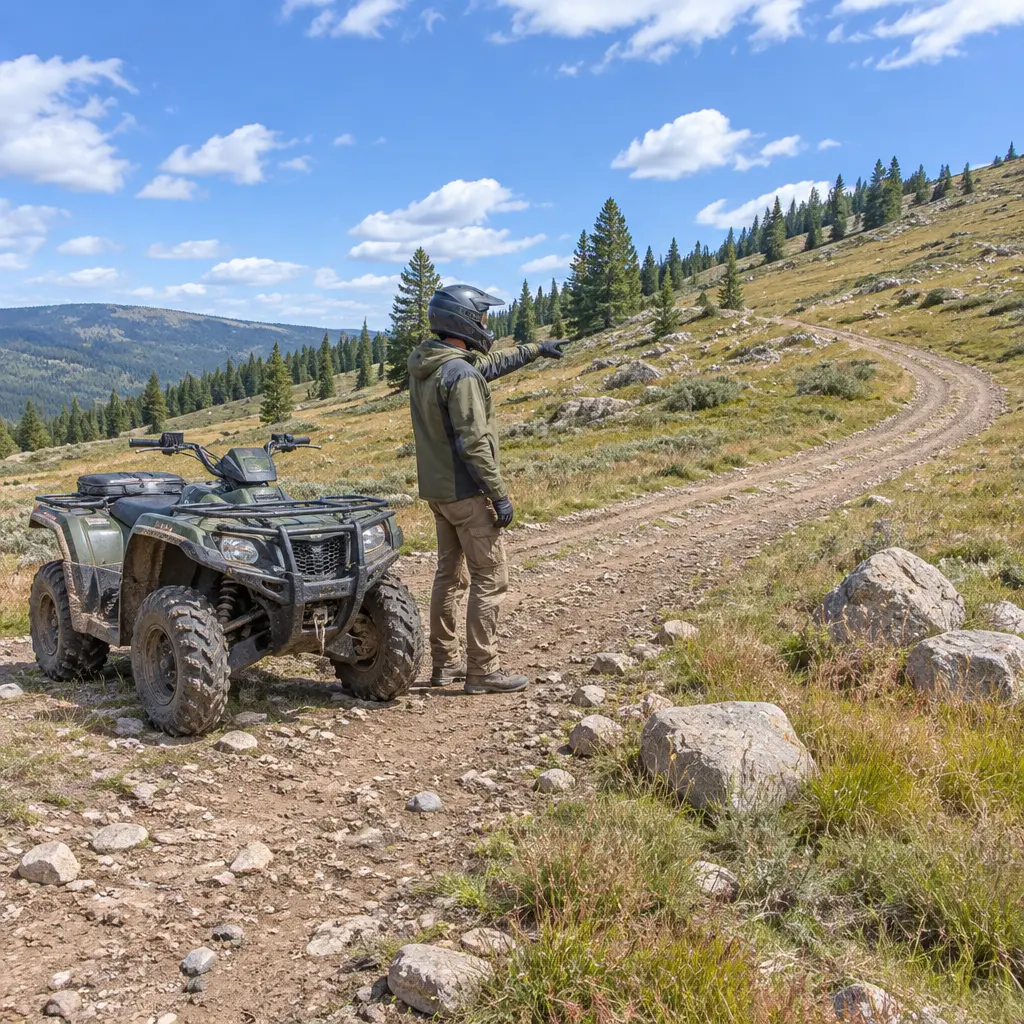
Look for loose surfaces, hidden drop-offs, ruts, rocks, water, and changes in slope. Avoid terrain that exceeds the ATV’s capability or the limits stated in its manual. Do not approach a hill at speed to “carry momentum,” and do not proceed if you cannot see a safe route or a suitable place to stop. Weather and surface conditions can turn a previously manageable trail into a hazardous one.
Use training and protective equipment
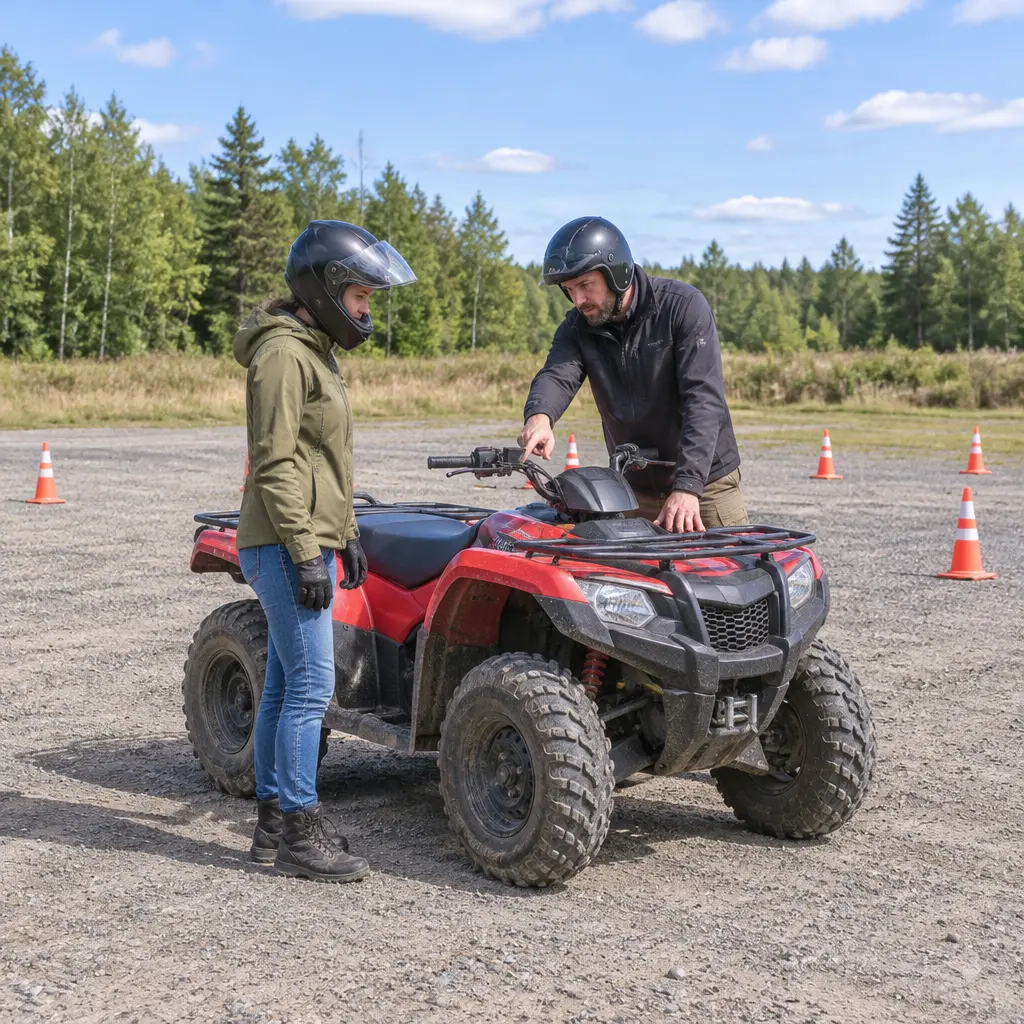
CPSC recommends that ATV riders take a hands-on safety course and wear a Department of Transportation-compliant helmet, eye protection, long sleeves, long pants, gloves, and over-the-ankle boots. Training helps riders practice control and terrain assessment in a supervised setting. Protective equipment can reduce some injury risks, but it cannot prevent a rollover or make an unsafe slope appropriate.
Know when to stop
If the machine begins to slide, lift a wheel, or lose predictable steering or braking, prioritize the instructions in the owner’s manual and any training received. Avoid improvised recovery actions that could place the rider beneath the ATV or in its downhill path. Before riding, learn the manufacturer’s guidance for stopping, turning around, and recovering from a slope, and carry a communication method appropriate to the area.
What ATV Injury Data Says About Stability Awareness
The CPSC’s 2022 annual report estimated 93,700 ATV-related injuries treated in U.S. emergency departments and reported 545 ATV-related deaths for which it had data for 2022. These figures cover a broad range of incidents, not only steep-incline rollovers, so they should not be interpreted as a slope-specific risk rate. They do show why safe operation, training, and equipment choices matter. The CPSC also cautions that its estimates and fatality data have different reporting and timing characteristics, making direct comparisons between them inappropriate.
A useful visual for training is a simple diagram showing the tire contact patches, the support area, the combined CG, and the direction gravity acts on uphill, downhill, and sidehill orientations. Such a diagram can explain why a higher CG or a shift toward the downhill edge reduces stability margin, while also making clear that the model omits changing traction and suspension behavior.
Conclusion: Apply Center-of-Gravity Principles Before Riding
ATV stability on steep inclines depends on the combined center of gravity, the tire support area, slope direction, traction, and the rider’s actions. Uphill travel can unload the front tires, downhill travel can increase forward loading and speed, and sidehill travel can raise lateral rollover risk. Rider posture and low, secured loads can help manage stability, but they cannot overcome unsuitable terrain or poor traction. Review the specific ATV owner’s manual, take hands-on safety training, wear recommended protective gear, and choose a safer route whenever the slope or surface is uncertain.
Sources: U.S. Consumer Product Safety Commission, 2022 Annual Report of ATV-Related Deaths and Injuries, https://www.cpsc.gov/s3fs-public/2022-Annual-Report-of-ATV-Related-Deaths-and-Injuries.pdf; U.S. Consumer Product Safety Commission, ATV Safety, https://www.cpsc.gov/Safety-Education/Safety-Education-Centers/ATV-Safety-Information-Center; Recreational Off-Highway Vehicle Association, ATV Safety, https://rohva.org/atv-safety/