Learning to ride an ATV (all-terrain vehicle) can take a few hours to gain basic control and several practice sessions to ride confidently across varied terrain. There is no single timetable: experience, instruction, the machine’s size, and riding conditions all affect progress. The U.S. Consumer Product Safety Commission (CPSC) reports that ATV-related injuries remain a significant safety concern, making supervised practice and formal training important—not just getting comfortable with the controls. The sections below explain what “learning” involves, realistic time ranges, the factors that influence them, and how to practice safely.
Learning time depends on the rider and the ATV
Learning time is the practice required to operate an ATV with adequate control for a particular setting. The ATV Safety Institute (ASI) teaches riding as a set of skills—including starting, stopping, turning, shifting body position, and responding to terrain—not as a fixed number of hours that guarantees competence. A beginner may understand basic controls in a short, supervised session, but that does not mean they are ready for trails, hills, mud, or changing conditions.
As a practical estimate, allow a beginner at least a few hours of instruction and practice for foundational skills, then continue in several short sessions before attempting more demanding terrain. These are planning estimates, not a validated universal benchmark. A rider’s progress should be judged by consistent, controlled performance rather than by elapsed time.
Basic control and first practice
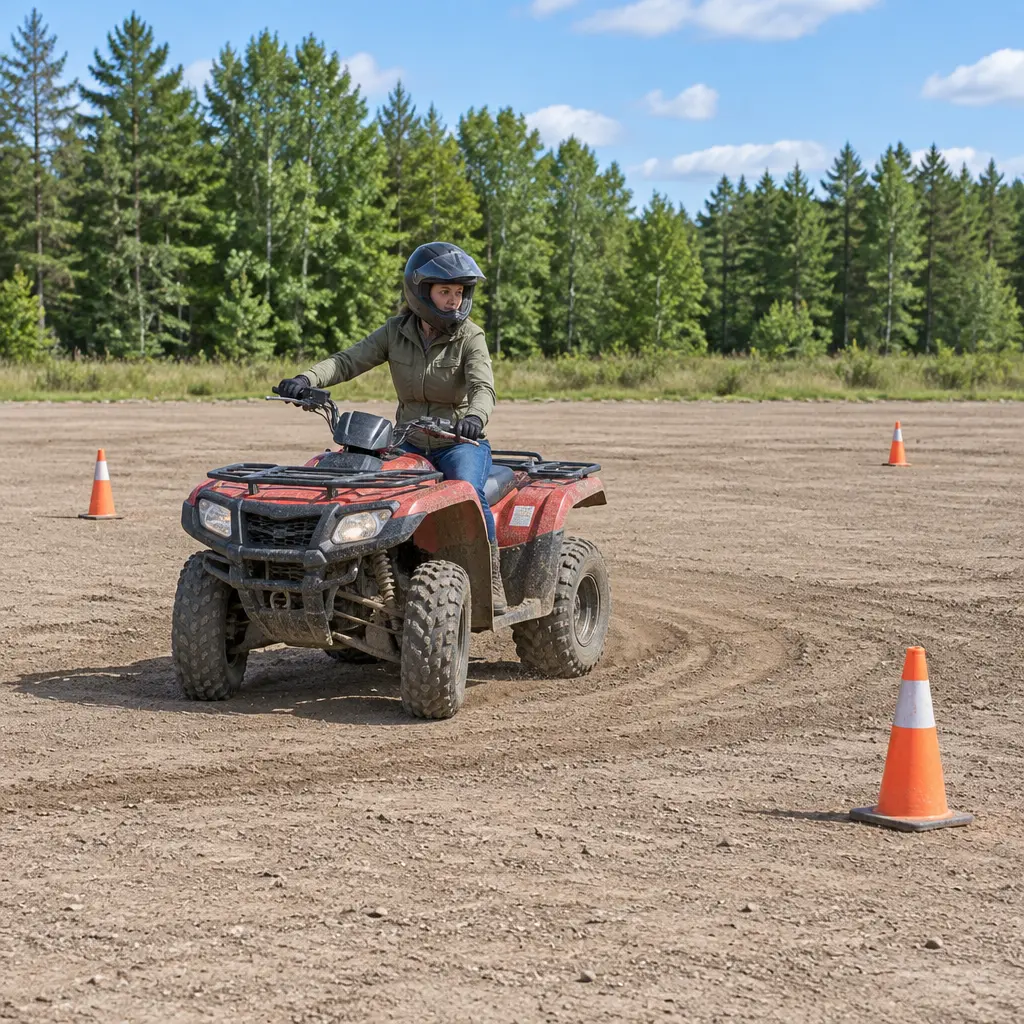
Basic control means being able to identify the controls, start and stop smoothly, maintain a manageable speed, and steer through simple turns. On a properly sized ATV and a flat, open practice area, some riders can begin demonstrating these skills during their first session. Give extra time to braking and turning: an ATV’s handling differs from a car or bicycle, and riders need to learn how their weight and body position affect control.
Confidence on trails and varied terrain
Trail competence is the ability to manage changing surfaces, slopes, obstacles, and visibility while maintaining safe control. It generally takes longer than learning basic operation because terrain introduces new demands. Practice should progress gradually from level ground to gentle, predictable slopes and other conditions only when the rider can reliably stop, turn, and maintain a safe speed. Being comfortable on a flat field is not proof of readiness for a technical trail.
Factors that change how long it takes to learn
The same practice schedule can produce different results for different riders. Previous experience may help with balance and awareness, but it does not replace learning ATV-specific handling. Machine fit, instruction quality, practice conditions, and the rider’s age and maturity can also affect the pace of learning.
Rider experience, age, and instruction
A new rider benefits from clear demonstrations, one skill at a time, and feedback from a qualified instructor. Children and teens should use only an ATV that the manufacturer recommends for their age and size; adult-sized machines can be too powerful or difficult to control. The CPSC advises against carrying passengers on single-rider ATVs and emphasizes age-appropriate machines and safety practices. A supervised course can make practice more structured, but it cannot guarantee readiness for every riding environment.
ATV size, controls, and terrain
ATVs differ in engine size, transmission, braking systems, and handling. A machine that fits the rider and is appropriate for their experience is easier to learn on than one that is oversized or unfamiliar. Flat, open ground is generally a better starting environment than loose gravel, steep slopes, deep mud, or wooded trails, where traction and visibility can change quickly.
A safe progression from beginner to capable rider
A sensible learning progression builds skills in order and introduces complexity only after the basics are reliable. The ASI’s rider-training approach covers fundamentals such as protective equipment, controls, starting, stopping, turning, and riding strategies. Training and practice should take place in a legal, suitable area with supervision appropriate to the rider’s age and experience.
Start with fit, equipment, and a pre-ride check
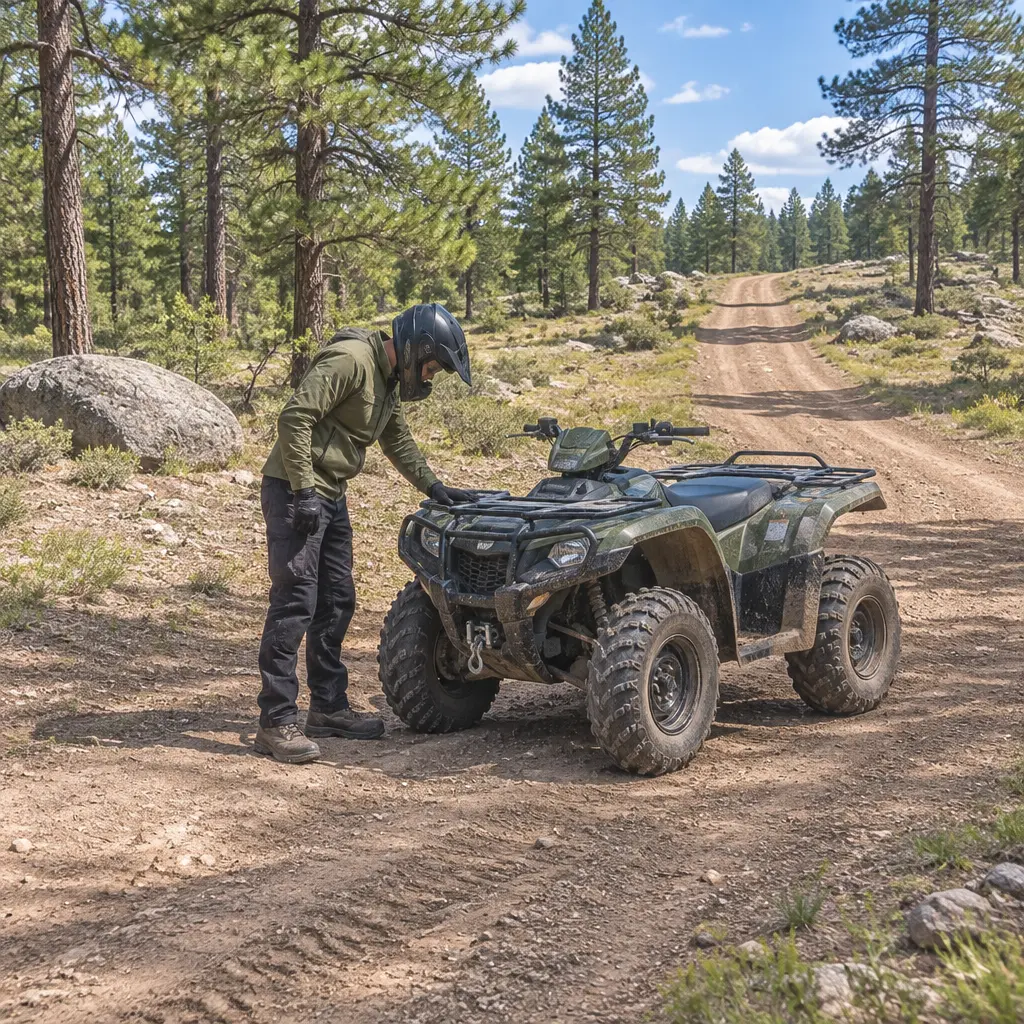
Before riding, check that the ATV is designed for the rider and that the operator understands its controls. Wear a properly fitted helmet and other protective gear, including eye protection, gloves, long sleeves, long pants, and over-the-ankle boots. Inspect the machine according to its owner’s manual, and do not ride if brakes, tires, throttle, or controls are not functioning correctly.
Practice essential skills before adding difficulty
Practice starting, stopping, controlled acceleration, straight-line riding, and wide turns in a clear, level area. Add tighter turns and gentle changes in terrain only when the rider can repeat the basics without rushing or losing control. Keep sessions short enough for the rider to remain attentive, and stop when fatigue or frustration appears.
Use safety measures as part of learning
Safe riding is part of competence, not an optional step after learning the controls. Ride within the operator’s ability, follow the manufacturer’s guidance, avoid paved roads unless the ATV is legally permitted and appropriate, and never ride under the influence of alcohol or drugs. The CPSC’s ATV safety materials stress helmet use, age-appropriate vehicles, and avoiding passengers on single-rider machines. Because injury risk cannot be eliminated by experience alone, continue to reassess conditions and limits on every ride.
How to tell when you are ready to progress
Readiness is demonstrated through consistent behavior, not a particular number of practice hours. Before moving to more challenging terrain, a rider should be able to start and stop smoothly, make controlled turns in both directions, manage speed, follow instructions, and recognize when a condition is beyond their ability. If those skills are inconsistent, return to simpler practice rather than pressing ahead.
For a practical example, a beginner who can ride slowly around a clear field but struggles to stop precisely is not yet ready for a busy or uneven trail. More supervised practice on braking and turning is a better next step than increasing speed. A qualified instructor can help identify gaps that a rider—or a parent supervising a young rider—may overlook.
Conclusion
Many beginners can start learning basic ATV controls in a few hours, but dependable riding ability usually requires repeated practice and careful progression. The time depends on rider experience, age, instruction, machine fit, and terrain. Begin with a suitable ATV, protective equipment, and a supervised open practice area; master basic control before attempting trails or difficult conditions. Consider an ASI safety course, follow the manufacturer’s guidance, and progress only when safe skills are consistent.
Sources: ATV Safety Institute, ATV RiderCourse, https://atvsafety.org/atv-ridercourse/; U.S. Consumer Product Safety Commission, All-Terrain Vehicles (ATVs), https://www.cpsc.gov/Safety-Education/Safety-Education-Centers/ATV-Safety-Information-Center